Democratising Cell Separation and Activation: Interview with CoED Biosciences
Format: 35 Minute Interview
0:11
Hello and welcome to this interview with Oxford Global.
0:14
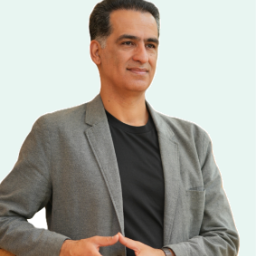
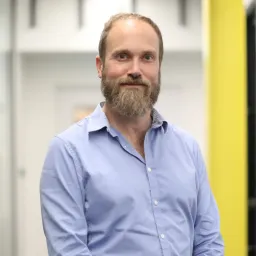
Today I have the pleasure of being joined by David Coe and Saeed Fathi, both founders of CoED Biosciences where David serves as CEO and Saeed serves as CTO.
0:27
CoED will be joining us for our Cell UK 2025 conference in the start-up zone, which will be taking place this November.
0:36
Saeed, David, thank you very much for joining me today.
0:43
So first I just want to get a little bit of background about CoED.
0:49
David, what unmet need were you and Saeed trying to address when you started CoED Biosciences?
0:56
So I guess by way of introduction, my background is a tumour immunology in the preclinical side of things.
1:04
So I've spent a lot of time separating immune cells, especially T cells from different tissues, from cancer biopsies, from various different types of blood product.
1:19
And normally that's amazing, it's successful, but sometimes it fails.
1:26
That failure can be catastrophic, especially if you're in the middle of a big experiment.
1:30
So that's really got what got me originally started thinking about how can we make separation easier?
1:40
This also coincided with me studying how immune cells migrate around the body as using a lot of technology to understand how these processes work.
1:54
So at some point there was this kind of fusion between asking myself how to improve cell separation and expansion and asking myself why don't we do it the way that the body does it.
2:09
And I think that was my, I guess, primary ‘eureka moment’ where I was realising that in the lab we are using the same process as the body uses, as in we're studying the way cells cross membranes.
2:26
But that's never been tried as a way of processing and manufacturing cells and especially for cell therapies.
2:35
And I've been to a lot of conferences where we just hear again and again that cell therapies are not hitting their targets, they're hard to manufacture, and all of those things kind of fitted together into, you know, a real desire to try and get this product onto the market and ideally into the clinic.
2:55
Thank you, David.
2:55
Saeed, can we talk about the CoED device itself. Can you walk us through how it works and what makes it so different from traditional separation based methods like centrifugation or magnetic beads?
3:12
Yeah, sure.
3:12
And in answer your question, I will take a step back as well and mention the fact that I've been developing products from idea to a scale in past 15 years.
3:25
And several of these years have been spent in cell therapy instrumentation development in companies like GE Healthcare and Cytiva.
3:35
And I am very much aware of the process and the complexity that goes into the cell therapy development and manufacturing.
3:48
And when I met David through a shared network in cell therapy community, it was, it resonated very well with me that when we have ability to introduce simplicity, why not?
4:04
Why should we consider complexity?
4:06
So that was my ‘eureka moment’ around like, you know, wanting to join David.
4:11
And at that time I was looking into using microfluidics for separating cells, which coincided with some of my past work in my fellowship in Cambridge University, looking at single cell isolation.
4:26
So that was how I actually like very well connected with the topic and very pleased to be part, you know, founder in this company.
4:37
But answering your questions around how the device works, the way it works is that we have an ability in our platform to utilise the cell migration and the cell migration.
4:51
The way it works is actually we use cytokine and chemokines that enables encourage immune cells to pass through membrane.
5:02
The way that they do in the body.
5:03
They the way that the lymph node in the body works is that they, the cells penetrate through layers and membranes, they go into the lymph node, then they get functionalized and then they directed to certain parts of the body targeting their targets essentially.
5:21
And that's what we are leveraging.
5:23
We are separating immune cells through filter membrane using these cell migration chemicals, cytokine and chemokines.
5:35
They pass through these membranes.
5:36
There we activate one specific type.
5:40
In this case, we have a lot of data around the T cell, and we are going to have some more in other types of immune cells that is trending in the market.
5:51
So activating one specific as I mentioned T cell then we have the ability to encourage them to pass through another membrane and purify on the migratory highly activated and motile T cell.
6:09
So that's how our system works.
6:11
It's a stack of layers that's been essentially like, you know, functionalized by the chemicals that we have formulated and it's part of our patents, which is covering the process and also the device that enables us to purify highly migratory T cell and in general immune cells.
6:35
And we have that opportunity to do other functionalizations.
6:38
We'll we should we'll talk in the rest of this conversation.
6:43
Thank you very much, Saeed.
6:45
So David, could you talk about your primary customers today? Are they academic researchers, biotech companies or clinical developers and how are they using the CoED?
6:57
Yeah, so the at the moment we are quite early stage.
7:02
So we are testing our products internally.
7:07
Saeed’s done an amazing job in manufacturing our what we call the LabSep, which is going to be our first product that we take into the lab.
7:16
And that's really designed for people who are using primary tissues like the human blood samples such as buffy coats and leuko coats that you get from the NHS BT or leukapheresis products that you might be bringing into your lab to turn into CAR T.
7:38
We're also testing out the ability of our systems to separate out tumour infiltrating lymphocytes or TIL from tumour biopsies.
7:47
And there are kind of different benefits to using our system for those kinds of products.
7:54
So at the moment we really want to get our product in front of PhD students, SMEs that are working on early cell therapies, postdocs, academics, anybody who is trying to work out how to quickly efficiently manufacture cell therapies, quite a high end number for a relatively low cost.
8:20
So that those can be tested firstly in vitro in the lab, but then in kind of preclinical tumour mouse models.
8:29
And the one thing we really offer is that we create these motile cells.
8:35
Ideally we can motile cells that we can tissue target. And these tissue targeted cells should be able to clear cancers faster and more efficiently.
8:48
So we want lots of people to come to us.
8:52
That's going to be the great thing about the kind of the conference coming up is we'll be able to put our products in front of these early stage cell therapy developers.
9:02
They'll say, you know we've found the say the neo antigen on the tumour, we've developed a CAR T or a TIL that recognises these cancers.
9:14
We know it kills it in the dish, but we're not seeing the right kind of distribution in our preclinical models to really effectively kill it in kind of preclinical mouse models.
9:26
And hopefully then you know they'll come to us say what kind of tissue targeting can you add to this?
9:35
We'll hopefully build at that in and also make the manufacturing cheaper and easier.
9:46
The other upside is that we can fit, because of the small form factor of our systems, we can fit a lot of them into a single lab and it's really important in those early preclinical and lab based studies to have high end numbers.
10:02
So you want to be separating, helps functionalizing your cells from lots of different tissue, tumour biopsies, blood biopsies, lots of different patients or healthy volunteers to really demonstrate that you can use your systems in any patient.
10:21
And they are obviously with humans, they're very diverse.
10:26
You can do that with our systems, other larger scale preclinical and clinical systems where you're spending a hundred, five hundred-thousand pounds, just for the system.
10:37
You have to do one at a time.
10:38
So that's the other real benefit we're going to be offering to those customers.
10:43
And we then want to grow with them as they develop their cell therapies into preclinical and clinical.
10:50
We want to start partnering with CDMOs like eXmoor Pharma, cell therapy developers like Autolus and Quell and AdaptImmune, and creating those partnerships to take a product into the NHS.
11:06
And ideally we're going to be there by 2034, getting those first cell therapies into the clinic directed to tumours working really well in a system that more people can afford to access.
11:26
Thank you, David.
11:26
Saeed, can you give an example of how a researcher or cell therapy developer might use the CoED in a typical workflow?
11:39
Yeah, sure.
11:40
So in answering this question, should they take a take on to your first question you asked me about the, you know, comparing with the centrifugation and magnetic beads.
11:50
So typical researchers or a cell therapy developer, the way that they use cell separation, is as you mentioned, centrifugation or magnetic beads.
12:05
And in doing so there are a number of steps involved.
12:10
They have for example a leukopak, a type of blood product, for example, buffy coats PBMCs in the blood format and also in solid sort of format.
12:20
The solid biopsy that comes in.
12:22
And in the case of let's say liquid biopsy, they have these samples that they have to go through, take it through high shear forces through centrifugation, or when they use magnetic beads, they have to use these magnetic particles that they are going to potentially cause similar effect to centrifugation in terms of, you know, causing cell exhaustion.
12:50
This is where we come in with our very gentle approach of using biology.
12:56
We are leveraging biology in the way that is happening in the body with cells.
13:01
So a typical researcher will take a sample of a buffy coat, PBMC or leukopak and hopefully in the future whole blood they put it into our device.
13:15
Our device has three chamber and we call them niches.
13:19
So niche 1, niche 2, niche 3. In niche one at the very top, they put in the sample, they inject into that niche and that liquid sample then interfaces with the buffer which has been already primed.
13:32
These are typical growth buffer that is actually used in lab environments and then they add the media additive which is relevant for attracting these old immune cells.
13:48
So the T cells, B cells, NK cells, macrophages, these are all being encouraged to pass through the filter membrane and they reach niche two which is the middle section or middle chamber.
14:00
And in there then they need to inject the media additives which is relevant to niche 3 at that point. And what happens in niche 2, not only we are attracting the immune cells but there as I mentioned to you, we with our formulation we do have ability to activate one specific type.
14:22
The T cell gets activated at that point.
14:25
Upon activation of T cell, they start to proliferate and expand and not only that they have the ability to migrate them as an activated T cell compared with the naive cell and other type of cells into an history.
14:39
So we attract them essentially through that gradient of cytokine and chemokine through the 2nd membrane, and at that point only highly migratory activated T cells are being collected at the very bottom of our dish and they start growing and expanding in quantity.
15:03
And what differentiates us from the others is just leveraging biology the way it should be and doing so we are offering a very gentle process removing the complexity from the typical workflow.
15:20
And therefore not only we are doing that, but also we are separating migratory immune cell, migratory T cells that they have naturally a higher ability to be more effective in going back to the page that part of the body that they need to do the cancer killing.
15:40
One other use case is with the solid biopsies whereby these biopsies are normally in a typical workflow is like, you know, digested mechanically or enzymatically.
15:53
And as a result of that there will be some side effects.
15:56
Whereas in our case, when the solid biopsy is actually put into niche one in the top of our chamber, what happens is that through these chemical signalling, we are able to attract these TIL essentially cells.
16:11
And therefore, we'd be able to kind of like reduce again the complexity of the workflow, but also like being a lot more gentle in doing so and be more effective as a result of that.
16:26
Thank you very much.
16:28
So obviously bringing a new platform onto the market is bound to encounter a certain market and regulatory challenges. David, could you talk a little bit about those kind of challenges that you might be facing?
16:43
Yeah.
16:44
The, so the regulatory challenges are a bit further down the line at the moment.
16:50
We will have to address those, and we'll talk to the MHRA about our registration as a medical device.
16:57
And we will work with those kinds of partners like CDMOs and cell therapy companies that I mentioned to get our product ready for GMP, ready to go into clean rooms to make products to the standards that need to be maintained in the clinic.
17:18
And that's a discussion with the various regulatory authorities to have in the future.
17:24
And I've always been told don't leave these late, start having those discussions now.
17:30
So we are, we've put in our designs with the MHRA, and we've spoken to and applied to the various grants that the NIHR. Spoken to, Cell and Gene Therapy Catapult and CPI and got loads of really great feedback about the various regulatory applications, and how much that's going to cost, and how we plan for those in the future.
17:58
Those will be done in partnership with the CDMOs, the cell therapy manufacturers.
18:04
So at the moment, because we're in the lab, the regulation is a lot less.
18:09
We'll get kitemarks for things like sterility, make sure there are no leachables in our products.
18:14
So the kind of basic things that you need to demonstrate to provide our customers with the kind of trust in our technology that they need, that it works, it's going to create the cells that they need for their therapies.
18:31
So that kind of then goes a little bit into our marketing direction and who are going to be marketing this at first.
18:40
And that is, like I said, very much the early cell therapy developers.
18:45
And I think we have a great network in this country and in Europe of people who are really excited about TIL therapies and CAR T therapies.
18:56
And me being in the southwest engaged several people at Bristol and Cardiff who are actually manufacturing these therapies, trying to get those costs down and making new therapies that will have applications across not just blood cancers, where there's quite a few therapies, some areas at the moment, but also in solid tumours.
19:19
And there's a lot of challenges that come with that. Saeed’s at Cambridge.
19:24
And we've also been taught to Cambridge University Hospital about isolating TIL from tumours there.
19:32
So we're plugged into these networks.
19:35
They're helping us to advise what the market is, what the pain points are for cell therapy developers at the moment, and that all links in to how we're going to distribute our product, how much we think we can sell it for, and where those markets are going to be.
19:58
And we're really hopeful because it's such a simple product that it can be rolled out not just to the big cell therapy industries in the Western world, in, you know, the states, Europe, but can also be used as a really simple way of separating out immune cells in low tech environments, in environments where there are not necessarily consistent power supplies.
20:23
So in the future we'll look at those new and expanding markets as well.
20:31
So there are lots of potentials with this system, lots of exciting opportunities.
20:36
And yeah, we'll be happy to talk to more and more people who are in cancer diagnostics, infectious diseases, as well as cell therapies, to see where there might be new opportunities to test out our products at the moment.
20:51
At the moment, because of my background in cell therapies, we're very much focused on that cell therapy area.
20:55
But the more people we talk to, especially at the conferences that we've been to, the more we're realising that there are these are other applications, that there is interest and people are coming to us and saying, oh, actually, you know, you're saying cell therapies, but I could use it for that.
21:12
And it's also worth pointing out that we're not dependent on T cell therapies.
21:31
We think that our system will work with lots of other therapies.
21:35
And there's really exciting research going on in cell therapies using regulatory T cells, NK cells, macrophages, B cells, you know, all of these cell types are migrated and they will go through our system in a similar way T cells do.
21:50
So there's loads of opportunities there for us to go out and collaborate with academics and SMEs.
21:57
And got to mention iPSCs because they are also very exciting and there's lots of potential protocols there that we can use in our system to separate out those different stages of differentiation in an iPSC derived cell line.
22:14
So hopefully there's going to be applications in tissue engineering and the production of various stem cell products.
22:24
That's fantastic. Thank you, David.
22:28
Saeed, how does your method promote functionality better than conventional technologies? And could you explain this in the context of particularly TILs or T cells?
22:40
Yeah.
22:40
So what we are trying to do is to address a set of challenges that is currently in the development and manufacturing of cell therapy.
22:53
And these cell therapy has been obviously like organically grown having available platforms and stitching this instrument to that instrument and in between you have to have washer steps and all of those.
23:09
So a new paradigm of thinking is really needed to be able to take this to the next level for the sake of the patient, for the sake of enabling more and more of these patients actually having access to it and for the sake of reducing the cost of course.
23:27
So the way that we are approaching it is that we are disrupting that mindset of like going from all these instrument heavy processes, some of them very much in centralised manufacturing approach which are going to serve obviously like an important part of the market.
23:47
And as they these therapies grow at some point there is definitely need for having a hybrid arrangement.
23:55
The way that we’re approaching it is integration.
23:59
We are integrating these processes into one small form factor. To the extent of point of care, we are enabling those processes to be in small form factor.
24:14
As I said, not only a platform has currently some data that we have shown that can isolate effective and migratory immune cells, but also we have an opportunity to functionalize them, as David said.
24:28
In terms of functionalization, we are talking about the specific genetic modification and also imprinting cells to be targeted to specific organ.
24:41
So our platform enables the integration of these complex processes into one simple form factor.
24:49
And then we are adding new functionalities to it so that it can be vision in longer term that it can be in the hospital next to the patient and be able to offer that sort of therapy to the point of care.
25:06
And obviously as we are trying to take a stepped approach by this, I mean, we are going to introduce our minimum viable products for evaluation purposes to researchers.
25:20
At the same time, as David said, you're working with hospitals, with pharma partners in order to kind of like, you know, progress with new therapy development in our platform because obviously it does bring in opportunities and IP around new therapy development in such a small form factor and moving away from all those complexities to this simple form factor.
25:44
It does require some form of reformation of the protocols and obviously that's an upside opportunity for CoED Biosciences.
25:52
So that's how we find ourselves offering higher functionality within one small form factor device to the therapy developers and manufacturers.
26:04
And that, you know, migration, that transition from development to manufacturing is as seamless as possible with this approach.
26:14
Because when what is happening in the market is that a lot of these processes are developed in a lab where you don't have that sort of like, you know, all established like, you know, clean room environment for like, you know, back-to-back instrumentation approach.
26:30
And we are offering all in one enclose a small form factor that enables transition from the scientific labs to the clinical outset or the pharma companies that they manufacture them in the CDMO space.
26:46
At that point a lot easier.
26:49
But also to the towards the point of care approach whereby you know, from the lab to the clinic, it can be as seamless as possible with our approach.
26:57
So that's how we are offering higher new form of functionality in the platform that we are developing.
27:07
Thank you very much.
27:09
And finally a question for both of you. What's your vision for CoED Biosciences in the next three to five years and where do you hope to see your technology making the most impact?
27:21
David, let's start with you.
27:24
Yeah, ultimately in cell therapies, I think there are two opportunities there.
27:30
One is to enable scientists and clinicians who are doing those early trials to make more cell therapies.
27:41
If we can reduce the cost and the number of failed experiments, then ultimately that means more cell therapies will get to preclinical trials.
27:53
If we can improve the effectiveness of those preclinical trials, then more of those cell therapies will make it into phase one and phase two clinical trials.
28:04
And the more that are coming through, the more opportunities that will be, the more that we'll get to those final stage.
28:11
And ultimately the dream is to be having a cell therapy that's used our system all the way from the drawing board in the lab all the way through to those phase one, phase two clinical trials and ultimately comes out of the end of the FDA, EMA approved therapy for solid cancers.
28:32
If we can go for one of the big ones like lung or pancreatic or breast, then you know that would be absolutely incredible.
28:39
And the, you know, the vision is to be offering these kinds of therapies to patients that don't have any other options or any hope for that.
28:48
You know, if we can create more of those therapies, then that's going to be a good thing.
28:54
And we have to create them at a price point that is affordable for as many people as possible.
29:02
I think that's definitely the dream.
29:04
The vision I guess with that happening is you know 5 to 10 years in the future.
29:11
So the more short term vision is to get in the funding we need to really demonstrate that works in our lab-based models.
29:19
And in three years’ time, I can see us being well established in the Southwest and Cambridge, working with loads of really exciting groups, working on loads of different cell types, bringing in all kinds of different ways of not just functionalizing the way cells move through our system, but functionalizing the layers in our system.
29:43
So that we can create just new and varied cell culture systems that are not just a static two-dimensional system but actually have this capacity to leverage chemotaxis and cell movement as part of their development.
30:04
This will mean bringing on some experts in the AI modelling of cell therapy developments.
30:13
And I know there's loads out there and hopefully we'll be meeting some of them.
30:18
But yeah, I think those are my two key visions.
30:22
Saeed, what do you reckon?
30:25
Yeah, absolutely.
30:26
And I think if I want to use just one key word, it's going to be: partnership, partnership, partnership.
30:33
I mean, at the end of the day, it's not a about the technology that the company can make it through and have the impact in their vision.
30:46
A lot of it is really if people care and in doing so, we want to make sure people understand the opportunity that they are bringing in through our platform.
30:59
That is aiming to very much challenge the current paradigm of complexity and having the ability to have all, you know, all of these processes in a small form factor to the point of care, leveraging biology, bringing simplicity as a result of that and therefore having less risk of transition from development to manufacturing.
31:26
And that's very strong and we want to make sure that people understand that opportunity.
31:33
And so partnership is a very big part of it.
31:36
So three to five years, not only we are working with academic outsets that they are going to benefit from the simplicity of our platform for their therapy development in their sort of early days.
31:52
But also we want to make sure that the bigger partners in the future they will be hearing about us.
32:01
And understand this along with all other paradigms available right now is a lot better approach to have that enable some of these therapies, that historically they seem to be very viable, but unfortunately, due to the complexity, they have failed.
32:20
Maybe we have an opportunity in the next three to five years also to work with certain groups within academia and pharma companies to revitalise some of their cell therapy trials in the sense of using our platform enables their therapy to be a lot more effective.
32:42
And therefore, as a result of that, we have an opportunity to be making an impact and of course, our stakeholders are going to be benefiting from being a part of our journey as a result.
32:54
So yeah, I'm very excited about the next three to five years and a journey that I started about 7-8 years ago.
33:02
We had cell therapy that resonated significantly with me, you know, having the ability for the immune cells to be to become more effective through these therapies.
33:13
And they do the job of like, you know, killing cancer without those complex treatments like radio therapy and chemotherapy.
33:25
Being able to see immunotherapy being the very first line of treatment at an affordable price point and especially for countries that they can't afford having very expensive therapies, that's very empowering and that's very encouraging.
33:48
And I'm very much moved by that vision.
33:51
That's why I joined David to offer this platform hopefully to the market.
33:57
And we are looking forward working with the partners that they share the same vision with us.
34:04
So, yeah, thank you very much for having us in this call to share our story and being able to convey the message to the community that way.
34:20
Saeed and David, thank you so much once again for joining me today.
34:25
A reminder that CoED will be joining us at Cell UK Startup Zone in November, So please make sure to check out their offerings if you're at the conference.
34:35
Yeah, once again, thank you so much for joining me today and best of luck in the future, guys.
34:42
Thank you, Tom.
34:43
Thank you very much, Tom, see you at Cell UK.
34:46
See you soon.