Enabling Strategies for Advanced Therapy Operations: Interview with Radix Partners
Format: 23 Minute Interview
0:12
Hello, and welcome to this interview with Oxford Global.
0:15
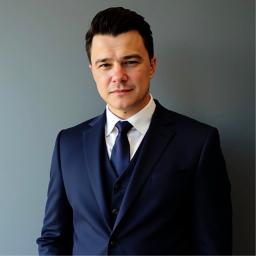
Today, I have the pleasure of being joined by Cristian Circiumaru, the Managing Director at Radix Partners.
0:23
Radix will be joining us at our Cell UK 2025 conference at our Startup Zone, which will be taking place this November.
0:31
Cristian, thank you very much for joining me today.
0:34
Hi, Tom.
0:34
Thank you for having me.
0:37
Great.
0:37
So let's just get started.
0:39
So for those less familiar with Radix Partners, could you tell us a little bit about the company's origin and what drove its mission to support advanced therapies?
0:48
Sure.
0:50
Radix Partners was founded with a mission to bridge the gap between scientific innovation and let's say, initial clinical results and operational planning and execution in advanced therapies.
1:01
Our focus is not R&D discovery, technical writing or you know, early stage operations in general is more how do you think, how do you run a mature operational value chain in your latter stages as a biotech?
1:16
What we see early on, including our own past assignments and experience in the industry was that many biotech companies developing cell and gene therapies have brilliant science but lacked the operational frameworks needed to scale.
1:30
So we do all this to bring strategic cross functional expertise.
1:35
So as part of the scale up ambitions of these biotechs.
1:39
So spanning supply chain, manufacturing, commercial readiness and obviously the cost, the CGT economics part, which is very important to help these companies realise their clinical and commercial ambitions.
1:52
So our I guess our hands on background in CGT itself in both clinical and commercial operations does allow us to be a partner that can be deeply embedded.
2:02
So not just as consultants, but as partners helping to build durable operating models for our clients matching the industry operation complexity.
2:12
As we know it, Radix itself as a word in Latin means root foundation.
2:18
So the whole goal for us is to help our clients establish this strong foundation roots so they're successful long term.
2:28
Great.
2:28
So one of your key service pillars is supply strategy and integrated business planning. Could you explain how you help biotech clients align operational and financial planning to support both clinical and commercial goals?
2:45
Yes, absolutely.
2:47
In advanced therapy is the link between the operational execution part and the financial viability or commercial viability, which is obviously a hot topic for this at the moment is especially tight due to that.
2:58
So more so than in biopharma and traditional models, as we know that there's a lot of pressure now in on the industry overall to cost optimise while scaling at the same time.
3:11
My own background itself, it's in the sales and operations planning or SNOP, it's also known as integrated business planning.
3:19
When you have the financials, it's a big area of supply chain and it works in traditional pharma models, It's not as known in biotech.
3:29
So I'm trying to bring that experience to cell and gene as well.
3:32
So basically we help clients build integrated business planning models that link the patient pipeline.
3:40
So the forecast demand with the manufacturing capacity, supply logistics directly to the financial outputs.
3:46
Once we have mapped out the likes of cost of goods sold or cost of goods manufactured, then you can start linking that with the gross margin of your therapy and start running this scenario based the pricing models to inform your commercial strategy, where if you are a manufacturer CDMO inform your pricing strategy.
4:06
Then as we reach more business operations, the process itself helps around the day-to-day operations utilising this one number approach.
4:15
So for example, this is relevant when a biotech runs both clinical and commercial operations.
4:23
So having one number approach forms the basis for, you know, align decision making across the board and cater for that demand overall when you start putting it and schedule it on your actual physical assets.
4:36
So another example is a client is scaling up on lentiviral platform.
4:42
So we can start model the vector yield assumptions, facility utilisation, capacity planning and take transfer timing into all of that to inform future, you know, launch geographies all connected to back to the financial PNL of the company.
4:58
Another example is when a yeah, as I was saying, when a client is engaging both clinical and commercial operations, we bring that demand under one roof because ultimately the physical assets are the same for that demand.
5:12
And then via this one number approach, we established the key priorities in order to respond to that demand rather than working in Silas, you know, clean ups, commercial and so on and so forth.
5:24
It's quite a dynamic approach that the process offers and that helps our clients to plan proactively rather than reactively, I would say.
5:33
And advanced therapy developers often struggle with commercial readiness and launch readiness particularly. How does Radix support market expansion and distribution operations at this critical juncture?
5:50
Yeah, good question.
5:52
We often enter just as our clients are transitioning from clinical to commercial or as they ramp up their clinical trials in the latter stages, right, As I was saying, we're not technical necessarily in that aspect.
6:11
So let's say a customer has have a successful proof of concept or first in human trial as is known.
6:17
Then we start coming in to start educate how to run clinical trials.
6:22
And typically what we advise is using a pivotal trial which is a large brings large numbers as a dry run for commercial operations.
6:32
So the large complexity really accelerates as you go through the stages and towards commercial.
6:41
So particularly when distribution needs to be to support multiple countries, geographies, clinical and commercial tracks as I was saying earlier, at the same time cross-border regulations obviously and multiple therapies for different patient groups.
6:56
So yeah, it really accelerates in terms of complexity.
6:59
So we have built a scalable distribution models that integrate with treatment centre on boarding, chain of identity and chain of custody systems and very important in the process and working practises of the actual of the biotech itself to ensure that clinical launch readiness and manufacturing batch readiness.
7:19
However, it's both strategic but also practical in designing the infrastructure together, but also preparing those things as an internally how to work with themselves, with the vendors, with the CDMOs and help with any related standard operating procedures for that launch execution.
7:37
So if it's setting up a qualified business centre, for example in Europe, one or more we're setting up a distribute distributor agreement and negotiate that in the US, we work hand in hand with the clients to ensure and the risk as much as possible that launch.
7:56
Thank you.
7:57
You also offer strategic advice on hybrid manufacturing models and GMP scheduling. How do you help clients decide between centralised, decentralised or hybrid approaches and what does that execution usually look like?
8:14
Yeah, this is a big topic at the moment, obviously a hot topic in industry and for relevance I think to both the biotech spectrum, but also the CDMOs and their future positioning.
8:27
So I think for advanced therapies, it's not just a technical decision on the model that you're going to be employing long term.
8:34
It's a strategic one because it shapes the long term viability of the programme itself and the company ultimately.
8:41
So the choice is more about designing now for future scalability, resilience and cost efficiency.
8:49
And don't, I guess some of the learnings were that many companies are stuck with their own platforms which had them let's say an initial design and that's difficult to scale on.
9:02
So now we have the opportunity to design it right first, so to say with the scalability in mind.
9:08
So what we do is we start by modelling the future state manufacturing network versus projected demand across these geographies for each therapy because it there will be differences depending on the therapy.
9:23
And then obviously there's the launch timing to be simulated, the evolution of that pipeline and the regional regulatory considerations which are also obviously different.
9:34
So we assess the trade-offs of each model against this set of data.
9:40
You know, things such as the throughput required, the tech transfer burden especially asking for more for current platforms that the client might have and the failure is associated with that in the tech transfer.
9:53
And then obviously there's typically quite a significant CapEx spent involved in such moves.
10:00
So that needs to be also considered whether ultimately it makes sense or not.
10:05
So coming back to the models themselves, for example, the centralised model may be optimal for early launch and quality control, but can quickly hit limits in terms of capacity and turn around times.
10:16
A decentralised model on the other hand, supports speed and is more geographic reach easier, but requires robust standardisation, workforce replication and training and manpower.
10:27
It's a big challenge at the moment also.
10:29
And then also digital control system to support the standardisation because QC will obviously be a challenge locally.
10:37
So for the decentralised models, advancements are being made as we speak, but we're still quite away from this being mainstream.
10:45
And again, this is also especially due to existing platforms which the design doesn't involve an easier progression.
10:55
So cumbersome transfers as we were saying, but nevertheless there's a, there is a progress and also the regulators are now coming more and more efficiently to post guidelines and to work with industry and what the future of might look like.
11:10
The hybrid approach.
11:12
And on the other hand, as we call it's where core processing is still centralised, but key steps in the process like formulation to finish and final QC, again, if it's more automated are distributed locally or even at the point of care, depending on the therapy.
11:29
So a bit of mixed and match for some of the manufacturing stages.
11:32
So this can potentially become a sweet spot for again, depending on the target and the therapy for companies preparing for multi region and localised manufacturing, but also for CDMOs offering as I see evolving in the future.
11:49
So on that side, we also help operationalize facility build out strategies or CDMO expansion plans.
11:58
And whilst we do that, it's also creating those relevant partnerships with the future proof mindset.
12:03
So, you know, matching the client with the relevant partner at the right time, so they can move towards automation together, you know, close systems, platform consolidations or platform code developments.
12:18
So then their manufacturing architecture is always in sync and scales also with the operations long term.
12:26
This is a big and interesting topic and one that still requires I think more research and we're doing more research in the area as we speak in order to be positioned on how to best advise our clients, you know, as early in that journey as possible for that long term manufacturing footprint and model.
12:46
Thank you.
12:47
And can you give an example of how Radix helped design a commercial supply chain for a therapy perhaps moving into multiple geographies?
12:56
Yeah.
12:58
One example, you want a client with the CAR T therapy preparing for commercial expansion into the EU following the US launch.
13:05
So we work with them to 1st map regulatory timelines and the differences analysing that gap.
13:12
And then local batch release requirements obviously also needs to be accounted for in detail the core chain transit times versus the sellers of shelf life in each market.
13:24
And then obviously supply planning, the best practises for working with top parties or with the CDMO.
13:29
So this is the manufacturing scheduling part.
13:32
And then we designed a hub and spoke model.
13:34
So it was a centralised product manufacturing with regional QP release and a tier the reduced network for treatment centre delivery.
13:45
As part of the supply chain planning, we also built inventory and motor management tools in various systems to synchronise the demand signals with the manufacturing slots and the patient scheduling itself.
13:58
This very valuable triangle between ACP management, manufacturing scheduling and the inner workings, as I was saying earlier of the biotech itself.
14:08
So the work continues, but this is yeah, paving a way to be scalable, compliant and patient centric supply chain model and also for launching in other regions later.
14:21
Great.
14:22
And moving on to clinical trials, especially at late stage, operational complexity often increases dramatically. How does your team support CRO selection, trial logistics and site readiness among other aspects?
14:38
Sure, this is a good question and it's an underrated area when what we see is biotechs, you know, tend to obviously select the CRO.
14:48
Many of the key CROs know what they're doing and but also most of them come from the pharma world themselves.
14:54
So late stage stands for the vast therapies involve far more than just traditional CRO kind of services and oversight.
15:02
They require integrated orchestration across manufacturing, logistics and the clinical teams.
15:09
So we support the CRO selection.
15:11
We help with that benchmark and also provide obviously our best insights and practises into that.
15:17
But what's more importantly is it's the fit of that CRO and operational maturity for CGT operations.
15:25
So then we act in the middle by building the relevant governance models with that CRO, so linking with quality with CMC and obviously clinical operations for the biotech.
15:37
And then I was saying the very important part of actually scheduling with a with another third party, which is the CDMO, because typically it's the buyer that has the manufacturing scheduling ownership, not the CRO itself.
15:48
So again, everything comes back to the same physical capacity basically.
15:55
So yeah, everything is under one structure.
15:58
And for site readiness, we assess obviously the sites that are proposed not just based on the clinical criteria, but also the ability of them to manage the CGT important elements we were mentioning earlier in a chain of identity, the storage infrastructure for liquid nitrogen for example, turn around times.
16:16
All of that needs to be factored in an in agreed upfront, not just you know kind of limited on the CRO to manage without having those insights and without signing off on them.
16:28
And then the logistics also tends to be overlooked.
16:32
So again, we need to dig deeper.
16:34
We need to ensure the transfer lanes and that the couriers are using the courier that is kind of important to do so set them as well the customs cleaning process, how small that works and the tracking systems they have in place are fully aligned with the actual clinical protocol.
16:52
Great.
16:53
You also work directly on designing the patient journey and integration of qualified treatment centres. Can you share the current learnings from the typical patient journey and how automation techniques and analytics can be used to improve the timeline?
17:11
OK, yeah, this is a heavy one, but the one that requires attention and obviously improvement later on.
17:19
So I'll give it a shot.
17:21
I think the reality is that patient journey in CGT as we speak remains still highly fragmented, I would say, and often delayed by the variability across sites.
17:32
You know, different hospitals, different regions, different procedures.
17:36
There's not a manual scheduling involved for both on the ACP side and on the manufacturing side for the biotech teams in complex coordination.
17:45
Yeah, between all of these places to enable manufacturing and manufacturing readiness.
17:50
So our work so far was has shown the standardising and digitising this journey is obviously the way forward and you can start with more steps.
18:01
So for example, you need to design pretreatment workflows that are to be designed with the patient in mind obviously.
18:12
And scheduling with the GMP capacity as well as a governance process is very important to have more when scheduling patients.
18:21
Because when you have peaks in demand, for example, where patients are building up a bit of a backlog, you need to have that governance process aligned across the board.
18:30
It's not just for one party to say, are we going to this one because of X and Y, it needs to be for governance.
18:36
So we can put that in place with the biotech.
18:39
I think looking ahead one of the biggest and underestimated contributors to the overall timeline itself coming back to timeline and improvement is the QC cycle time.
18:51
So traditional QC processes in CGT are not only neighbour intensive now, but also poorly integrated or not only integrated with real time manufacturing and the decisions required for supply chain.
19:04
So I think that's a massive area to look into how can we automate the QC analytics going forward.
19:13
So there's work done on QC analytical platforms and we help our clients implement such practises.
19:22
So this will consolidate the assay data for example, across batches, sites and process steps will enable issuing turn based release models rather than always manual checks, early detection of risks also that comes out automatically and primitive so that leads to predicted batch dispositioning in a let's say semi-automated way with the QC still signing off on it.
19:49
But what issue being issued on an alert basis or to say so if we can integrate all of these with the manufacturing systems on the CDMO side and then with the with this digital chain of identity.
20:04
For the patient journey there, I think we can unlock significant reductions in total then to runtime overall.
20:11
There's also the automation of the QC workforce.
20:13
So DNA testing the automated data capture in line to issue digital certificate of analysis right COA and then remote review capabilities for the personnel.
20:28
So the all of these will support the future models involving also multi sites and then help yeah, standardise and harmonise the QC protocols.
20:39
So I think to summarise, we have a way to go here, but the solutions are starting to emerge.
20:46
So I think the first wave of the patient journey was focused on logistics itself and scheduling.
20:53
And now the next wave will be focused on this digital quality control.
20:57
And all of that entails leveraging these new practises and analytics, right?
21:04
And finally, for emerging biotech leaders, maybe watching this interview, if they had to get one thing right early on to scale successfully, what would your advice be?
21:19
Yeah, sometimes I use a few times this phrase of if your science is cutting edge, your ops should be too.
21:25
So what do you mean by that?
21:27
I think build your operation strategy as early as your science, or at least not lagging money behind, so to say.
21:34
So too often we see teams, biotech teams delay decisions on things like supply chain infrastructure, supply chain capabilities and skills, commercial models and commercial supply chains, the scalability and network planning aspect until they're facing the actual commercial deadline, right?
21:53
Until they are faced with that hard deadline, they are more focused on the next data point, the next funding around and obviously the regulatory approval.
22:04
So I would advise this to define a clear operational road map from the start as early as possible and one that connects the scientific milestones and regulatory milestones with your future market ambitions.
22:18
Because obviously to scale up truly is not just about having manufacturing and platform and technology.
22:25
It's also about running all of those things at scale for that, you know, patient access to broaden.
22:33
So this means, yeah, supply chain design and planning early.
22:40
Look at your cost of goods manufactured early planning capacity assumptions, understanding regulatory impacts by geography, building that cross functional yeah, know how on how to run these mature operations.
22:56
I think the companies that scale successfully are the how they think, yeah, two phases ahead or two steps ahead and also include the operation part, not just the science and technology.
23:10
Cristian, thank you very much for joining me today.
23:13
Once again, Cristian and Radix will be joining us at Cell UK 2025 in our start up zone.
23:20
So please come along and come and say hi to Cristian at the conference.
23:27
It will be taking place in November.
23:29
Once again, thank you so much for joining me today and I hope you have a great rest of your day.
23:35
Thank you, Tom.
23:35
I appreciate it and I look forward to seeing everyone in November.