Patient Involvement and Digitalization in Rare Diseases and Cancer: Interview with Christof von Kalle
Format: 20 Minute Interview
Hello, and welcome to another interview with Oxford Global.
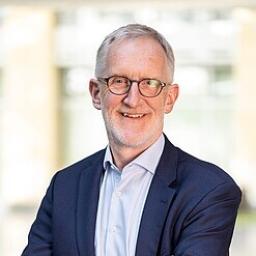
This time I'm delighted to be joined by Christoph von Kalle, Chair for Clinical Translational Sciences at Berlin Institute of Health, BIH at Charite, where he is Director of the Clinical Study Centre.
Their research focuses on patient involvement, rare diseases, cancer and digitalization.
And Christof will be delivering a plenary keynote talk at Cell 2025, which is coming up in November.
But before we start, Christof, thank you very much for joining me today.
Thank you, Tom.
Great.
So let's just start with your plenary keynote talk at Cell UK.
It's titled An All Stakeholder approach to Cell and Gene Therapy. Could you give us a brief overview of what that approach might look like in practise?
Yeah, this has been an all stakeholder approach that the German parliament has basically decided to take a deeper look at this, seeing what is developing all around the world in this particular field where there's very rapid development of new medical procedures and also products.
And it's of course a field of extreme complexity and challenges as well as innovation.
And so the Berlin Institute of Health, via the German Ministry of Research, has been tasked with the idea of generating a strategy on how some of the good aspects, especially in the basic research, might now be led into more applicable translation and then even therapies and products in Germany and across Europe.
And so the idea then is of course, to see how this complexity can be addressed and can be managed.
And in it is in fact necessary for these procedures that involve cell cultures, the development of virus vectors and other very advanced medicinal products to make sure that everybody that is needed is part of the process and is also on board with what is going on.
And so the idea arose to create a national strategy that is focused on the development of these things across Germany and Europe.
So it's a national strategy, but it also has a European aspect to it.
And so this is part of the development that I want to talk about.
Thank you so much.
So who do you see as the key stakeholders in cell and gene therapy development today, and how can their roles be better aligned, do you think?
Yeah, well, if you go along the path of a workflow of developing new findings, and there is basic research happening mostly in academic institutions, but also in part of the, you know, biomedical and pharmaceutical industry that creates ideas about methodologies.
And there is applied research also across some of these institutions.
But then if you go further, there is of course the necessity, if it goes beyond the borders of a single institution, it basically becomes a commercial project, first mostly in smaller biotechs.
And then as the requirements for creating medical studies become larger and the financial requirements also become larger than, you know, larger participants of the, you know, biotech and pharmaceutical industry. Biomedical products, I think are more than 70% of the innovations in pharma nowadays.
And so they are, they're very cost and resource intensive.
So the other stakeholders of course, for these things going forward, especially in as much as rare diseases are concerned and patients with complex diseases are the patient organisations as well as the public funding entities, you know, funding agencies for academics, they're making clinical research as well as then the capital market in these countries, which unfortunately is not quite as engaged as in the US and Asia in this particular topic.
So it's also from the European perspective, a little bit of an uphill struggle in that segment.
But all of these players are basically responsible.
And then this environment also especially in terms of gene therapy and cell therapy is very regulation intense.
And so the regulatory agencies and some of the regulations that are under development and still need to be developed or need to be reformed and simplified, which is also a major aspect of this whole thing are also involved in this discussion.
OK, thank you very much.
And going a bit deeper into that, what would you say that some of the biggest barriers preventing smoother collaboration between academia, industry, regulators and also patients are?
Yeah, well, of course, you know, barriers that we can overcome is especially transparency.
Not that anybody wants to hide anything, but not everybody is aware of who else is around and what are they doing.
So if we have, you know, of course, setting aside the biological complexities and the actual biological problems that need to be solved.
But even then, if there is an idea or if there is a theory or even if there is a practical construct that then needs to be implemented, it's not exactly clear who can contribute what in what moment.
And because all of the players are not available of what is available in the entire system.
So basically the first step is that creating a transparency around who is all participating in this process and sort of organising that in a way that is forward facing.
Some of the other barriers are that existing regulations hinder the progress of this going forward, not in as much as they are forbidding it to happen, but in as much as they involve multiple instances of regulatory approvals, ethic approvals and data approvals and all kinds of other complexities.
And sometimes, you know, manufacturing of products that are made for single patients have requirements as if you were producing pharmaceutical agents that is being delivered to the world to tens [of] thousands of patients.
And so therefore the expense of actually creating the biologicals for smaller scale clinical studies, you know, can be prohibited at times.
And also the regulatory burden of what you have to prove and have to do can be quite large.
And so these are all, you know, obstacles that then a small company or a single or a smaller group of academic investigations educators need to overcome.
And so the question is, how can you organise this all the while maintaining, you know, the perfect protection of patients that we of course all aspire to.
And so this is something that is quite a challenging environment to navigate.
I see.
Thank you.
And could you share any particular examples of where a truly integrated stakeholder model has accelerated progress or improved patient outcomes?
Well, if you look into other areas of medicine, for example in oncology or in immunology, where personalised approaches to medicine have integrated, you know, the patients, especially also patients in rarer configurations of disease with the diagnostic environment.
And then also with smaller and larger companies who have offerings in terms of treating these particular settings and making them available through what we call basket trial, which is, you know, creating the information of what particular molecular subtype an oncology patient might have and place them into the right kind of study environment.
And some of these, say, for example, in lung cancer have been showing truly life sustaining for these patients.
And so these integrated models were, we call it the learning health system, where you know the data from the local diagnostic process is pulled and then compared to what is available throughout the system.
And that information is referenced back to the treating physician and their patients so that they can make the optimal decision on where to go and what to do.
I think are very good examples of this.
Now if you now add the development of a specific therapeutic for somebody in a rare disease situation or even in a frequent disease situation with a recently identified, you know molecular mechanism that I think is a very good example that this can work.
And also implementation is then in at the end of the day cost effective for the health system.
That's great.
Thank you.
Now I'm kind of switching gears to more questions about the clinical study centre and translational infrastructure around it.
The clinical study centre at BIH and Charite focuses on digital concepts and standardised processes. How can these innovations directly benefit cell and gene therapy trials?
Well, the BIH, the Berlin Institute of Health and also I'm currently at the Luxembourg Institute of Health also, and that's a similar environment is basically a federally funded translational infrastructure that adds the component of developing translational research in into the hospital environment of the Charite, which is a very large university and experienced University Hospital that knows a lot about the research and clinical trials.
And so there is the possibility now to have this, you know, smaller, more speedboat kind of thing adjacent to the regular health system, which can focus on particular patient groups with rare diseases and also focusing on providing that additional bit of infrastructure like I mentioned that is in that environment.
And of course, if you start out in an institution like that, there's also some historically grown trial infrastructures, you know, coexisting structures.
And so we started out the clinical study centre with aligning all of these structures into one centralised service offerings for the ongoing clinical trials.
And sort of that's a process that has now been closed and there is, you know, a very good routine clinical trial supporting office structure at Charite.
And so then our next focus is now developing these more innovative projects and also working on the paradigm that in the future that has AI, so artificial intelligence and also has, you know, possibilities, but also need medical needs and requirements about basically every patient is how can we switch this paradigm from going, we are trying to find a study, a patient for each of our studies into something.
Can we develop a system where all of the patients are participating at least some information to clinical research and how can we find a study or a mode of improvement for every patient coming through the door?
So that means that we have the idea of, you know, consenting these patients, working on their clinical information, improving the data set that is actually recorded in the routine clinical environment and then studying that data more closely in order to identify those individuals that might benefit from some of these developments.
Excellent, very interesting.
And further to that, the concept of broad consent has been central to your work as well. How does this improve the efficiency and also the ethical use of patient data in research?
Yeah, there are some health systems around Europe and, Britain maybe one, and Scotland.
I think is exemplary in this area also and some other areas of Europe, but not so much in Europe where the digitalisation has brought about the ability to identify patients, say by their diagnosis, to consent them to providing, you know, their data for research, but also bringing something back to them for identifying potential areas of improvement of their treatment through working through that data.
So in a way the research question has become a very central question to the care nowadays care of especially patients with complex diseases.
And so the broad consent is the idea of explaining this scenario to patients and consenting them as they come in into in a more broader spectrum, providing the partially anonymized data to the health research system while at the same times also offering to them that their data gets processed.
And if something gets identified that might improve, you know, their possibilities or might enlarge their access to certain innovative trials and treatments to basically become to a much more informed and if you wish, learning health system where we're not only working on the data of every patients as to what exactly is known today and what you know can happen in their routine environment, but broaden that scope and enlarging that scope into looking at something.
Is there also the potential for something else?
Is the diagnosis really right?
And all these other things that you can do if you have data access in a closed and safe environment.
Also, you've talked about trial prototyping. Could you explain what this means and how it changes the way that we design clinical trials?
Well, one of the conundrums and also, how do you say, oddities in clinical research is that a lot of the clinical research protocols are bespoke, you know, contractually and also from the design.
So basically you could have almost had the impression like the clinical investigator, you know, or the pharmaceutical company takes an empty sheet and rewrites the whole thing from the bottom up each time.
Now if you consider that larger pharmaceutical companies, but also institutions like between Britain and Charite and so forth have probably been conducting clinical research together for the last 100 years, one wonders why isn't there a standardised practise?
Why do still for every new trial and every new pill, the lawyers negotiate for 6 to 12 months on what the contract should be between the institutions or the institutions and the companies.
And so what we're heading for is really a trial prototyping where we now use artificial intelligence and you know, if you wish chat bots to write the clinical protocols and very much build on a standardisation framework that we can do with simplification of how, you know, the text is written, the data is reported, the data gets transferred from place to the next, the information flows to the patient, the type of databases that are used in order to, you know, basically finally harvest the efficiencies of scale that this system should have had in a long while.
This has become so incredibly expensive.
And a lot of these things are, you know, manmade obstacles.
There's even a whole industry of, you know, trial design, there's a big industry of middlemen between the hospitals and the industry who are doing nothing but navigate this complexity, which is man made.
And so we're trying to very much cut through this red tape, if you wish, by looking at can we use artificial intelligence to come to a standardisation, to come to a much automated process of, you know, putting together all the regulatory stuff so that the clinical researchers and especially also the doctors can refocus on what they do best, which is their research and, you know, caring for patients.
You know, this may sound naive, but then on the other hand, you know, with a new generation of tools now at our hands, we have really focused our own research and also the research in my own group on those particular aspects of making things much more simple through standardisation and through the application of AI.
That's fantastic, really interesting.
So looking ahead, and this is my final question, what policy or regulatory changes would most help cell and gene therapy reach patients faster without also compromising safety?
Yeah, the same rule set should be applying across all of the markets in Europe and there should be simplifications especially also with regards to a platform application.
So say for example if a new gene therapy is done where only the receptor on a CAR T cell is being exchanged, you know the whole paperwork for the process leading up to that point should be reusable.
So we should have platform applications also if you consider some of the vaccines that are being developed that are patient individual, we need to have some sort of a platform regulation that is simplified that applies across Europe and that also encompasses everything from the application process and in the hospital through the hospital exemption manufacturing into something that is much more easy to navigate.
Just like we have that in the and in the conventional pharmaceutical environment to a degree.
And we have that in other procedures to a degree especially also where we have that in other areas of our life like the financial industry or you know traffic or some of the other areas where we have pretty efficient structures of getting things to market in a much quicker way and still a much safer way.
And that iteration of development, speeding up the iteration of development that way has in fact made our environment safer and better for customers and then sort of in the medical system patients.
And so we're hoping that, you know, the regulators, you know, simplicity is king, I must say.
Thank you so much, Christof.
And once again, Christof will be delivering the plenary keynote talk at Cell UK 2025, which is coming up this November.
So be sure to check that out if you are at the conference.
But just to close off, thank you so much, Christoph, for joining me.
And we look forward to seeing you at the conference.
Yeah, thank you, Tom.
I'm looking forward to it myself.
Thank you.