Developing Therapies for Cardiac Failure Using Neonatal Cardiac Progenitor Cells: Interview with Secretome Therapeutics
Format: 16 Minute Interview
10:08
Hello and welcome to this interview from Oxford Global.
10:10
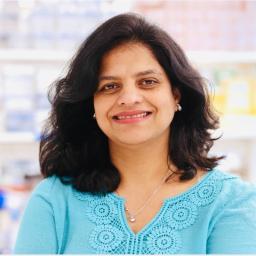
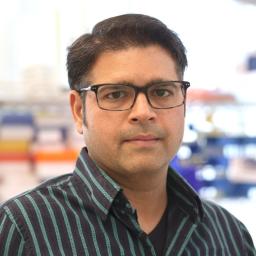
Today, I have the pleasure of being joined by Rachana Mishra, Co-founder and Senior Director of CMC at Secretome Therapeutics and Sudhish Sharma, Co-Founder and Director of Preclinical Research at Secretome Therapeutics.
10:27
Secretome will be joining us at our Cell UK 2025 conference, which will be taking place in November.
10:35
Rachana and Sudhish, thank you very much for joining me today.
10:41
Thank you, Tom, for having us.
10:45
I am Sudhish.
10:46
I'm the director of preclinical studies at Secretome Therapeutics.
10:51
My work focuses on developing the preclinical assays and identifying the mechanism of our drugs at Secretome Therapeutics.
11:04
I have like 15 years of experience in Preclinical Research and I'm very happy to join you and share our journey as well as our therapy and our work, which we are doing at Secretome Therapeutics.
11:29
So my name is Rashana.
11:31
First of all, thank you, Tom for the introduction.
11:33
My work focuses on developing cell based therapies for cardiac failure using human derived neonatal cardiac stem cells.
11:40
I have spent over a decade translating stem cells research into real clinical treatments.
11:46
And at Secretome Therapeutics as a team, we live raise the power of NCPCs and their Secretome to treat cardiac failure in new and powerful ways.
11:56
I'm happy to share more about our therapy and what we are doing at Secretome Therapeutics.
12:03
Fantastic. Thank you very much both.
12:05
So my first question is for Sudhish, what led you to focus on neonatal cardiac progenitor cells as the basis of your therapies?
12:17
Thank you, Tom for your question.
12:19
This is the one actually I really enjoy answering and this is the field which I have been working for the last 15 years.
12:26
So first I will answer your question direct that we chose neonatal cardiac progenitor cells as the foundation of our therapies because of their superior regenerative potential as compared to most of the cell types we have as we have done in comparative analysis.
12:47
So these cells come from the newborn hearts due to which they are they still retaining natural regenerative ability and this regenerative ability is mostly lost with age in their stem cells when they are isolated from adults.
13:06
So these neonatal cardiac progenitor cells are the most biologically active stem cells.
13:13
They are very adaptable to the environment they are put in and they are primed to support cardio tissue repair in particular and all the tissue repairs in general.
13:25
Second thing is that I was very fortunate to work with our founder doctor Sunjay Kaushal, who is a leading paediatric cardiac surgeon.
13:37
And through his work with the neonatal patients, we are incredibly fortunate to ethically access neonatal cardiac tissue that allowed us to discover and develop this powerful cell type, because not many surgeons have labs and not many labs have access to this kind of precious tissue.
14:01
Now another thing which is very important is that our neonatal cardiac progenitor cells show minimal donor to donor variability and that this property makes them suitable for large scale production with consistent potency and batch to batch reproducibility.
14:24
Unlike any other stem cell type, we once isolated from $1.00 and then we can keep on producing their batches without any variations.
14:33
And this property is essential for developing a reliable off the shelf therapy.
14:39
Lastly, combining all these properties, neonatal cardiac progenitor cells are uniquely powerful due to their regenerative potential and the practical foundation for building next generation therapies that can truly change the way we treat heart failure.
14:59
Thank you. That's fantastic. Thank you very much, Sudhish.
15:03
Next question for Rachana, how does the biology of NCPCs compared to adult derived or even embryonic stem cells in terms of regenerative capacity?
15:15
Oh, that's a very nice question, Tom.
15:18
So as Sudhish has explained a lot about it, but yeah, NCPCs strike an ideal balance between regenerative potential and clinical safety.
15:27
In our research, we have done direct head to head comparison between NCPCs and other adult derived cell types, and we found that NCPCs consistently demonstrate superior survival, bio activity and regenerative signalling and they retained their youthful like properties across multiple passages.
15:48
They mentioned their telomere length and release a robust consistent Secretome that is enriched with growth factors critical that is those growth factors are critical for cardiac repair.
16:00
And as Sudhish mentioned, they show minimum donor to donor variability, which is essential for production.
16:07
And in contrast adult derived cells vary significantly in potency based on the donor age and health.
16:15
So I often say God made us the same, but as adults, our biology begins to reflect how we lived, how what we experienced, how we aged, and these kinds kind of variability also shows up in the cells and their potential.
16:34
Thank you. Thank you so much for that.
16:37
And then in terms of your company name, Sudhish, the “Secretome” is in your name. What role does the Secretome play in the efficacy of your lead candidates?
16:50
Thank you, Tom, for this question.
16:52
Actually it is a verb which is secrete and then we made it a noun which has become Secretome and then we adopted this name.
17:04
Now it is the basis.
17:05
Secretome is the basis of any stem cell therapy.
17:11
The stem cells, as we have identified, do not usually differentiate into the cell types or wherever they go to show their effect.
17:24
But stem cells show their effect through the paracrine secretions and their Secretome.
17:31
And this whole of the paracrine secretion, we call it as the Secretome.
17:36
So Secretome is the functional engine of our therapy.
17:40
It is a powerful blend of natural signals from our cells that actively participate in repairing the heart and they do so by reducing inflammation and restore the function.
17:53
And then they function in a reparative way on the cells where they need to be there and the cells and the transplanted cells needing to stay in the body.
18:06
It is like delivering a molecular toolkit that jump starts healing exactly where it is needed.
18:14
That's great, thank you. More. Now onto your kind of clinical strategy and the indications.
18:22
Sudhish, you're currently targeting two serious heart conditions and that's HFpEF and dilated cardiomyopathy. What makes these two indications A strategic fit for NCPC-based therapies?
18:41
Yes, thank you for your question.
18:43
So that is heart failure with preserved ejection fraction, which means that the heart fails without actually showing any indication that there is a reduction.
18:55
There is no reduction in the blood amount of the blood the heart throws out or does during its beating.
19:02
So it remains usually undetected.
19:05
That makes it very dangerous.
19:08
So the heart failure with preserved ejection fraction and dilated cardiomyopathy are the challenging forms of heart failure with very few effective treatments.
19:19
Most of them are like the treatments which are currently available, try to help them by reducing the weight of the patients like GLP1 and the SGLT2 inhibitors.
19:32
But there are still meaningful gaps in the treatment that need to be addressed because these drugs do not address the main cause that is the reduction in the functionality of the heart.
19:47
And these both challenges of heart failure with preserved rejection fraction and dilated cardiomyopathy are driven by multifactorial pathologies like inflammation, myocardial stiffness, microvascular dysfunction and impaired cell signalling.
20:06
Our Secretome or the Secretome derived from neonatal cardiac progenitor cells addresses these multifactorial challenges because of its multi component composition.
20:23
So that's where our cell therapy comes in.
20:26
Unlike conventional drugs that typically target a signalling pathway, neonatal cardiac progenitor cells have the potential to address multiple aspects of this disease at the same time.
20:40
So by leveraging the regenerative power of the neonatal cardiac projector cells, we are aiming to help hurt heal on multiple levels, offering a broader and more holistic approach to cardiac repair than the traditional single target drugs.
20:59
So you know these single target drugs, they target one pathway at a time, but they and there is not a single disease which has only one symptom.
21:11
Most of them are associated with multiple morbidities.
21:16
So our drug targets multiple problems at the same time.
21:24
This is a very, I mean, if I can say, it is a like a traditional stupidity conventionally held to have a single target drug because no problem or no disease comes with only one problem.
21:55
Our drug addresses not only a strategical opportunity but also critical unmet clinical need.
22:03
Our cell therapy delivers meaningful and transformative impact for such problems.
22:11
Thank you very much for that, Sadhish.
22:12
Rachana, could you tell us about the early clinical data so far, particularly around the safety bioactivity, and patient response?
22:52
Yeah, so our clinical programme is still in its early stage.
22:56
What the initial data are very encouraging.
22:59
The therapy has been well tolerated with no serious adverse effect reported yet and it looks very good so far and we are seeing early signals of bioactivity including reduced inflammation and improved in cardiac function.
23:16
Most patient have shown of better sign for like exercise capacity and quality of life.
23:27
So that's very exciting.
23:29
While we have more to learn as the trial progresses, this first result is strongly support the potential of our approach.
23:37
So it's exciting and yeah,
23:43
Yeah, everything is going in right direction.
23:46
Very exciting indeed. Thank you very much for that.
23:49
Just the final two questions here, just about your translation and your commercial outlook.
23:56
Sudhish, where do you see the biggest commercial opportunity? Will your therapies be used as frontline therapies or are they more likely to complement existing standards of care?
24:08
Yeah. So Tom, our approach is a healing approach rather than targeting one pathway at one time and then just fix the symptoms.
24:18
So we see our treatment being added on top of the current heart failure drugs to make them more effective.
24:26
But in the long run, especially if our phase one and two studies show that our therapy changes the course of the disease, we think it could become a first choice option for our patients because it is a healing approach, not like targeting only the symptoms.
24:52
So our goal is to not only just managing the symptoms, but to actually help the heart to heal and this could position our therapies as future frontline agent.
25:06
That's brilliant. Thanks so much, Sudhish.
25:07
And then finally Rachana, now what should the biotech community watch for next from Secretome Therapeutics in the coming 12 months, let's say?
25:20
Yeah. So next year will be big for us.
25:22
We will be releasing new data from our clinical trials, particularly focused on safety and early sign off efficacy.
25:30
We have some exciting pipeline programmes in the works that build on what we have learned from NCPC so far.
25:38
Additionally, we are expanding our GMP manufacturing capabilities to support late stage development and future commercialization.
25:46
Yeah. So I would say beyond data and milestones, we hope the biotech community sees us as champions of new therapeutic model, one that combines cell biology and the Secretome to advance targeted regenerative medicines.
26:03
That's fantastic. So, it sounds like it's going to be a big year for you guys.
26:08
And of course, you can see Secretome Therapeutics and what they'll be doing at our Cell UK 2025 conference, which will be taking place in November.
26:19
But before we wrap up here, I just want to say Rachana and Sudhish, thank you so much for joining me today and we'll see you at the conference.
26:28
Thank you, Tom.
26:28
Thank you, Tom, for having us.