Adding a Decade to the Healthy Human Lifespan: Interview with Joe Betts-LaCroix, Retro Bio
Format: 25 Minute Interview
Hello and welcome to this interview for Oxford Global.
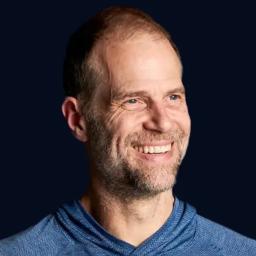
Today I have the pleasure of being joined by Joe Betts LaCroix, who is CEO of Retro Biosciences.
Joe will be joining us for Cell UK 2025, and we look forward to hearing about what he'll be talking about at that conference.
But first, Joe, thank you very much for joining me today.
Thank you for having me.
So Joe, you've had a really fascinating career from academia to setting up your own businesses and computer hardware as well as medicine.
Now you've set up Retro Biosciences, you intend to extend the healthy human lifespan.
Could you explain what led you to working in this area?
Well, the topic for my next company, and I generally just do companies, that's how I contribute, was wanting to contribute somehow in healthcare.
And what I found from my survey at the beginning was that about over 3/4, closer to 80% of all the effort and money spent in healthcare, it goes to age-related diseases.
And so obviously a deep understanding of why ageing creates these diseases should be how this entire industry works, right?
But looking around, it's very much not the case.
The pharma industry, which has, you know, done a fantastic job for many decades and creating huge number of medicines that we rely on for so much of our health.
It primarily focused on the most proximal causes of these various diseases and very little concerned with why do they occur late in life?
How does the biology of ageing intervene in them?
And so the direction that I chose to go was to build a company that would be a new pharma company that is specifically drawing on an understanding of ageing itself, which is in an academic field.
As many of the attendees will appreciate the studies, the molecular and cellular processes of how ageing works to use that as a source of new targets and therapeutics for age-related diseases.
Thanks very much.
So how would you describe your approach at Retro Bio and what would set you apart from other biotechs?
Well, I am not deep into other biotechs, so I couldn't comment too specifically on like why we're different.
Primarily we are going for our goals in the most direct and efficient manner possible.
To some degree, I'd say that our DNA comes out of a Silicon Valley sort of, you know, Y Combinator sort of like startup first principles ethos.
So that in some ways that's a bit different from some biotechs I suppose.
But I'm sure it varies a lot from one company to the next.
I guess that's more style wise.
In terms of approach, we are relatively agnostic on approach and we'll be expanding soon with the closing of additional financing and add additional programmes.
So our programmes are all focused on a mission of adding ten years of healthy lifespan to humanity.
The ones that we're pursuing right now are a small molecule that's specifically going for increasingly large fractions of Alzheimer's disease and then a cell therapy also focused on Alzheimer's through a different, completely different approach.
And then a cell replacement specifically for age-related loss of immune function.
So it's quite a diversity of approaches, I guess.
That's great.
And you mentioned there Alzheimer's disease.
What are some of the other age-related indications that you're working to treat?
Yeah.
So the restoring of the autophagy process which is how our first product to market operates and it'll be in the clinic in a little bit over 8 weeks.
Is not specific or limited only to Alzheimer's, but there are other age-related diseases that can be ameliorated through essentially restoring the process that removes basically junk like misfolded and aggregated proteins through over long periods of time in cells, especially neurons.
So there are other diseases where this process is likely to also be helpful such as Huntington's and other age-related neurodegenerative diseases for that specific one.
There are also other neuro inflammation related conditions that increase with age that are microglia replacement programme is likely to have like an efficacious effect on because.
So I don't know how much I should go into how much time we have, but I'm sure all of the attendees and viewers know that microglia are one of the four fundamental sort of main cell types of the brain, along with obviously neurons and astrocytes and oligodendrocytes.
Obviously there are many more, but they are the primary resident immune cells of the brain and are a big part of older brains and pathological states getting stuck in a sort of a chronic neuro inflammation state.
And so that is what we are working to resolve with this microglia replacement therapy.
And there are a bunch of other conditions besides Alzheimer's that will be influenced by that.
Excellent.
And your presentation at Cell 2025 is it's called utilising stem cells for targeting ageing mechanisms to increase healthy lifespan.
Could you explain a little bit about what you'll be talking about in that particular session?
Sure.
Well, in general, stem cells and in our case cell therapy, the exciting aspect of essentially, I mean some oversimplified, but the stem cells from an ageing biology perspective is that especially full reprogramming.
So taking like an adult sort of somatic fully differentiated cell and fully reprogramming it back to a pluripotent stem cell.
Not only does it, you know, there's a bunch of processes that happen most obviously that it loses its identity and forgets how to be its cell type of origin, you know, skin cell or liver cell, etcetera.
But it also wipes away the age characteristics of the cell.
And this happens and reproduction most you know, so most canonically when 2 cells from two different humans come together and form the cell, the pluripotent stem cell that gives rise to a baby, the, you know, the babies are born at zero age.
And this process also occurs if you sort of artificially, if you will reprogram a cell using Yamanaka factor reprogramming, where whereby you know a cell from an aged human can be reprogrammed back to pluripotency and becomes essentially 0 age again.
It wipes away the age characteristics of the cells.
So what we're doing is building off of that existing phenomenon that nature knows how to do and then redifferentiating those cells into a cell type that's meted by an aged person and then reintroducing those cells back into the person so they can perform their function and replace the existing old cells of that type in the person's body.
So it's a form of rejuvenation through replacement essentially.
And the first that will be fully autologous.
And that way essentially that the DNA of the cells are the same as the patient's own cells because they're produced from their own cells will be a therapeutic that replaces the blood stem cells and the bone marrow.
So that the function of these blood stem cells, which is to produce every type of blood cell in the body, which is a vast differentiated number of different blood cell types, you know, monocytes and red blood cells and platelets and all the different types of white blood cells, etcetera, all will be coming from a young blood stem cell source.
So that's the sort of bare bones of the architecture of the treatment or of the sort of the patient journey, I guess.
Thank you.
So retro uses a variety of therapeutic techniques and modalities to tackle ageing.
As you've mentioned, some of these are HSC reprogramming, autophagy enhancement, microglia, tissue reprogramming.
Could you talk about some of the stem cell based therapies you're looking into, particularly in preclinical development?
Yeah.
So I guess just expanding a little further on say, for instance, the HSC, the blood stem cell replacement, the path into humans for that has to go in a sort of stepping stone method where we begin in small indications where there's a very acute need for patients and then work our way into larger and larger indications.
You know, there's initially there are things like were just complete bone marrow failures for people immediately need to have a new blood system and then various kinds of other blood disorders and certain kinds of blood cancers.
And ultimately the therapy will be used for people who are no longer able to, you know, defend themselves from ordinary infections that a younger person could easily fight off, which is unfortunately a, you know, a tragic end to many lives where if their immune system were working fine, they would have many more years to, you know, participate in their families lives and so on.
So you're also involved with other areas of therapeutic design, notably Retro partnered with Open AI to develop GBT 4B micro for protein engineering.
What have you learned from that partnership?
Oh, so much, I guess probably the two main things I would say we learned were more generally, oh, we can actually make very potent functional things with generative AI models that mean we can think of proteins as creative tools that we can make and design on our own.
Rather than I think there's a, there's been kind of AI wouldn't call it learned helplessness, but there's been kind of a resignation, I think in the therapeutics industry over or I think maybe and also, you know, research in science in general over the last many decades, is that you, the proteins that you can use are the proteins that are given.
So if you want to make PCR work, for instance, you go find some oddball bacteria somewhere, say in a geothermal event of some kind that has a high temperature capable polymerase, and then a huge branch of biological tools is born.
You can, but you can't just say like, oh, we're just going to make a new one.
You have to go find that.
And similarly, you know, even the recent miracle of CRISPR is another example of finding something that nature's already built, rather than then saying, what if we could have a protein that would bind to specific spots in the GM and allow you to modify it at will.
So I guess the first thing we learned is, oh, these new AI tools that we can build actually allow us to generate brand new proteins that's new.
And it was essentially the goal of the collaboration and one of the was involved in what I was talking about before, which is reprogramming and enabled us to do much more efficient and rapid full reprogramming.
And it's in fact in our most recent FDA submission or I guess our penultimate FDA submission.
So it's exciting to see it actually coming to you.
So probably the second thing we learned was how do you go about building a model like that?
And I think that it was a great collaboration in the sense of, you know, we both teams learned a ton.
And I think hopefully we did a good job of bringing a bunch of, you know, biological intuition, understanding of biological problem sets, biological data sets for training and an idea how you go about validating AI generated constructs in the real world and laboratories and so on.
I think one of the things that we learned that was super helpful is how do you do the training?
How do you actually, once you have all this stuff assembled, how do you build up the model?
So that's exciting for us because now we get to build like a much larger one that we're in the process of a bunch of other things.
But I'd say those are the 2 main learnings.
Fantastic.
And also Retro was in the news recently with an announcement of your first clinical trial, so congratulations for that.
It's called RTR 242 for Alzheimer's.
Could you explain how that therapy works?
Yeah, without going into too much detail, it is an oral daily, you know, classic small molecule pharma drug that also crosses the blood brain barrier so it can act directly in the brain and in neurons.
And as I was mentioning before about this process of autophagy, which is a, as most of you I'm sure know, is a very complex and fundamental existing natural process whereby the sort of the machines of the cell that are constantly being generated, you know, proteins that are all the, you know, the enzymes that make our metabolism work are also getting destroyed by the same, the very same metabolism that they're enabling.
And they end up, you know, based on reactive oxygen species and various kinds of other forces getting, you know, mutated or like having pieces added on accidentally or getting fused with other ones and forming aggregates.
And they end up accumulating over time in cells.
And most of the time this process works fantastically.
And it's also just, I just want to acknowledge that it's an oversimplification to say autophagy because there's at least a different dozen different kinds of specialised autophagy.
But in general, this is a process that's continuously operating and under, you know, very careful homeostasis by the cell.
But in an advanced age and in a number of different pathological situations, the natural autophagy process does not keep up with certain types of waste products in the cell, and so they start to accumulate.
And RTR 242 is specifically addressing this problem by essentially booting the process back up, like increasing some of the molecular ingredients that are needed to make the late stage parts of the autophagy process continue the job and fully degrade those proteins, therefore, clearing up the space and removing toxic aggregates.
Thanks so much.
And then finally, my last question, just to circle back to the start, when you said your company's mission is to add 10 years to the average human lifespan, how achievable do you think that is?
And do you see a timeline for increased human longevity?
Well, predicting the future is definitely fraught.
I the closer it is, the better I can predict we will be in the clinic this year.
I think that our mission is specifically chosen to be feasible.
I've gotten a little flack in the press recently from people saying, oh come on, isn't 10 years a little small of a mission to bite off?
But.
You know to that I would say that, you know, if you cure cancer entirely, I think it adds a total of maybe three years to healthy human lifespan.
And if you entirely remove heart disease, you get another four years.
That puts sort of the magnitude in perspective.
So I think that from the perspective of a mission, I think it's certainly on the one end of the spectrum fully ambitious enough.
And when we're successful at it will be one of the, you know, the great achievements that I will be very proud of.
But is it too ambitious is sort of more of the explicit question.
And I don't think so.
And the reason being that I think that there are examples already of how a lifespan can be modulated there.
I mean, in that animal kingdom or experimental models that people use in, you know, research and pre both sort of academic research and Preclinical Research.
What we're talking about is you know, just a little bit over of a 10% increase in the sort of average healthy lifespan, which in animal lifespan terms is not that much.
So there are plenty of like animals of different perturbations that you can do that create much larger increases in lifespan.
And I think specifically in human there is the downside that the longer the lifespan of the experimental animal, the shorter the interventions, the less percentage increase the interventions tend to produce.
So it may be that a single intervention is unlikely to achieve our mission, but that's one reason that we have like a multi multimodal, multi programme company structure.
I think it's already the case that there are a bunch of, there are a bunch of interventions that people can presently do.
For instance, if you have a typical Western lifestyle, you know, the UK or the US or wherever, and you fix everything about it, that more than likely adds 10% to your lifespan healthy, at least the healthy portion of your lifespan.
So it's, I think it would be an oversimplification to say, well, you know, our job is to create an exercise pill.
You know, I think if you switch from what most people do, which is virtually zero exercise to one that can biochemically simulate, hey, getting bigger as daily exercise, that would probably already add 10%.
We don't specifically have that pill yet, but I think these are sort of like mental object lessons for the reasonable feasibility of doing this.
And on the time frame, like pharma's traditionally typically very slow.
We're trying to move as fast as we can.
We think that the you know, getting a drug to clinic from the start of operations in around 4 years is pretty good.
It still has to go through the classic pharma, you know, FDA, you know, phase one, phase two, phase three clinical trial process.
Perhaps there will be some regulatory improvements in the not too distant future that could speed that up for certain kinds of therapeutics.
But I am hopeful that, you know, we will have several of our therapies.
Certainly you will have all the current programmes in clinical trials by 2027.
And then there's, you know, time for additional trials after that.
So it's not like a well, you know, someday later this century or whatever, we'll achieve our mission.
Like I think we're on track.
Joe, it's been fascinating talking to you and thank you very much for joining me today.
And if you're interested in seeing Joe's presentation or anything else related to cell and gene therapies, then please do come along to Cell 2025.
But thanks very much for joining me once again, Joe, my pleasure to be here.
Thanks for inviting me.