A Regenerative Cell Therapy for Blindness: Interview with Kristian Tryggvason, Alder Therapeutics
Format: 14 Minute Interview
Welcome back to another interview for Oxford Global.
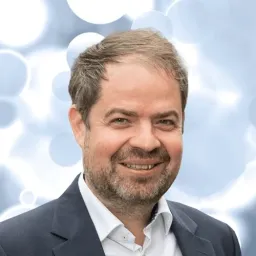
Today I'm joined by Kristian Tryggvason, Co-founder and chief executive officer at Alder Therapeutics.
Kristian will be joining us at our Cell 2025 event in London this November.
And Kristian, thanks very much for joining me today.
Thank you for inviting me.
So Alder has an interesting story of its beginnings, motivated in part by a discussion with your father, Professor Karl Tryggvason.
Could you describe how the company was founded and the work that you do in the regenerative cell therapy space?
Yeah, so back in 2008 or 9, my father approached me about starting a cell therapy company and I started, I tried to avoid this topic because I didn't really want to start a company with him.
But after a while, once he managed to explain his idea, I started doing some due diligence on myself and then thought that, hey, this might be something.
But at that point, I didn't really think that he had enough evidence to do a cell therapy.
So instead we started, I started a company, a reagent company that sold these laminin molecules to cell therapy developers around the world.
And the idea was that maybe some of these would actually become or reach the clinics at some point the risk kind of the drug development.
And now several of these companies are actually in Phase 1, 2 and 3 clinical trials.
So it actually succeeded.
But I was the CEO that for 11 years and I want to do something else.
And we had a patent in our portfolio which we owned 50%, which was how to make cardiomyocytes.
And I started helping Duke and US tech transfer team to out licence this.
And then they also had the photoreceptor asset.
And the more and more I started spending time with these, I thought that hey, these are actually probably the best cell therapy assets out there.
And I contacted my Co-founder Stijn and so that's wouldn't we start a company based on these?
And then we found some seed funding and we've so far raised about €5 million and pushed these programmes 2-3 years towards the clinics right now.
That's great.
And the company was founded with the mission to cure the incurable.
And at the heart of that is your Alder Edge philosophy.
Can you explain this approach and how it benefits the development of cell therapies?
Yeah.
So both me and Stijn have been in the industry for quite some time and neither of these projects are actually like are developments from scientists.
Instead we actually looked at these and tried to look at the commercial scope of it.
And basically the Alder Edge is we really want to have programmes that have a preclinical proof of concept, some kind of animal data showing that this therapy works.
We want the CMC to be robust, and we want to understand the health economics that market access in very early stage to see if there's actually any kind of commercial uptake later on when the product is ready.
And then to understand the cost of development and manufacturing at scale.
Basically to try to understand will there be a commercial case for this kind of drugs.
And then talking about your lead programme, which is ALD01, it's targeting the disease retinitis pigmentosa.
Could you explain a bit about this disease and why your company decided to target that?
So first of all, it's a really devastating disease.
It's caused by more than 100 different mutations in the eye leading to degeneration of the photoreceptors.
Basically first you become night blind and then your peripheral vision disappears and eventually it just becomes smaller until you become blind.
There are no treatment options for this disease today.
And usually the first indicate or first time that you start seeing some trouble with your sight is in the teenage, late teenage, in the 20s.
And then your eyesight just degrades within the next, depending on which mutation you have in the next years or decades.
And there's no treatment for these today except for one of these mutations.
There's a drug called Luxturna, but that can only treat about 2% of these patients, if these patients even know what mutations they have that causes this disease.
So, yeah, so that's why we wanted to do this because there's no treatment options for these and we had the tools to actually do it.
Yeah.
So you mentioned that the vast majority of patients in this with this disease, there's no available treatment options.
So how does ALD01 plug that gap?
So the other option out there and what many others are actually pursuing within academia is doing gene therapies and that would be you would need at least 100 different drugs to treat these patients.
And these populations are so small so that it would not be commercially viable to do this.
What we do is that we replace the cells that are degenerated in the eye with new cells and therefore we can treat this disease and the and therefore it is a mutation agnostic method and we can treat independent of the gene behind it.
So we can treat all these patients.
And ALD01 has a few benefits compared to other cell therapy options, particularly in its ease of manufacturing and the scalability.
Could you explain more about that?
Yeah.
So cell therapy manufacturing is really the core of Alder.
It's kind of based with these laminins that the company that I founded before.
So we use these laminins in manufacturing that makes these process simple, robust and repeatable.
For instance, with ALD01, our process is cultured as adherent cells from start to finish in a 2D fashion, kind of like HEK 293 cells or CHO cells.
So first we expand these cells into about 70% confluency and then we continue with the differentiation and basically only change cell culture meeting.
So it's an extremely simple procedure and it only takes 32 days to manufacture with our method when it takes 60 to 120 days with the others.
And they use these kind of complex 3D, 2D systems like spheres and organoids.
So we think that our manufacturing method is also automatable quite easily with the existing devices of today, if we would go that far.
That's great.
Could you talk about some of the preclinical data that you're seeing with that candidate as well?
Yeah.
So we have preclinical data from 4 different animal models.
What we really wanted to show with these animal models was safety, engraftment and maturation and efficacy.
So first of all, we wanted to show that our cells are safe to inject.
So that's we did that in nude mice.
And then we also been administering these cells in well actually three different animal models and seen that the methods that have been developed before work really well with this modality as well.
The second was to show engraftment and maturation.
So we inject these cells, we can see that they actually integrate with the host.
Our cells are actually progenitors when we inject and then they mature in place and then they start forming these discs that are really typical for rods and cones in the eye.
And then, but most of all, we the most interesting data is basically from these mice that they're called RD10 mice that lose their photoreceptors within a couple of weeks.
And when we inject mice with our cells, we can see that if we put them into this kind of water maze, adapted Morris water maze, it's about 150 centimetre wide swimming pool where there's a small platform.
And when you put the mice in the water, they will try to go to the platform.
If they can see it at the wild type mice, they find the platform fairly fast.
The ALD01 treated animals shortly thereafter.
And then the untreated animals, they usually swim around and don't really find the platform even if they're swimming towards it.
So that's really kind of work, preclinical profile concept so far that sounds really promising.
And then you're aiming, I think to have your first in human trials by 2028.
What are some of the clinical endpoints that you'll be looking for in terms of safety and efficacy?
Yeah, so the primary endpoint is of course safety and tolerability.
So we want to make sure that the cells that we inject stay in the eye and are tolerated.
Well, so far about 1200 patients around the world have been receiving this kind of replacement cell therapies.
And so far there hasn't been a single safety issue.
So we're not expecting safety issues.
But the secondary endpoints, we of course want to evaluate the anatomical and visual outcomes in the eye.
So what we will be looking at is the visual acuity.
Do these patients actually can they see or read a smaller text?
And then we want to understand the quality of life type of endpoints, if the patients can see better in the dark, if they can see figures, if they can navigate in a room and these kinds of things.
But since we're still a couple of years from the clinical trials, so that it is still a draft and we'll be working on this part in the next coming year.
Thank you.
So in the years since concluding your preclinical investigations, what has Alda been focusing on?
Yeah.
So I mean, we just started a couple of years ago, but I think that we've come quite far in different areas.
So first of all, we've built an exceptional team.
We have tech transferred our manufacturing to a CDMO where we have made the process even more robust and scaled it up to some kind of phase I/IIa level.
We have of course the preclinical proof of concept and that we have shown both of this, the CMC and the preclinical data to regulatory authorities both in the USA and Europe.
And then we did the market access and health economic analysis to understand the potential income sometime in the future.
And now we actually identified our Series A lead for the next round that we're trying to raise right now.
So we're very happy about that.
Fantastic.
Then finally, how do you ultimately hope ALD01 will impact patients’ lives?
So we aim to give hope and sight to millions facing blindness from retinitis pigmentosa.
I mean, these patients don't have any hope for regaining their sight and that we hope that this drug can actually change that.
Thank you so much for joining me, Kristian.
And if you're interested in regenerative therapies, cell cultures or anything to do with cell really, please come along to Cell 2025, which will be in London this November.
And Kristian will be there discussing more about Alder Therapeutics.
Thanks very much for joining me today, Kristian.
Thank you.