Putting our Brains in Drug Discovery: Interview with Joshua Bagley, A:head Bio
Format: 12 Minute Interview
Hello and welcome to this interview for Oxford Global.
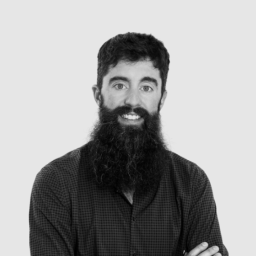
Today, I'm delighted to be joined by Joshua Bagley, who is Chief Scientific Officer at A:head Bio. Josh will be joining us at Cell 2025.
And his presentation's name is ‘Putting our Brains in Drug Discovery’.
And we'll be getting further into that as we as the interview goes on.
But first, Josh, thanks very much for joining me.
Yep, thanks.
Happy to be here.
So there's a problem with neuro-medicine, isn't there?
The pharmaceutical industry has spent billions on failed drugs for the brain, and still there are medical needs that remain unaddressed for many disorders.
Why is this the case, particularly for neuro disorders?
And up until now, what has the industry been missing?
Yeah, so I think there's really 2 main issues.
One is sort of a general issue that's always been there with drug development and that's translating findings from the lab into the clinic.
But then I think another one is sort of specific to neuro and to the brain.
And that's a lack of understanding of the basic mechanisms of disease.
And so I think this is really what the industry has been missing.
And I think what's become more increasingly clear in recent years is that we also need to be using more human systems.
And so I would say that's then even more relevant for the brain because there's a lot of really brain specific human specific features of the brain.
Great.
And A:head Bio thinks that cerebral organoids could be the solution to that particular problem.
Could you describe what a cerebral organoid is and how they can be used in drug discovery?
Yeah.
So in organ is basically a collection of tissues and cells arranged a certain way and built to perform a certain function.
So if you just think of the word organoid, it's an organ like tissue.
These are generally 3D tissue cultures.
And I would say, you know, initially there was really this distinct terminology.
We had organoids and we had so-called spheroids which were just, you know, aggregates of cells or a random arrangement of cells.
I would say the terminology more recently has become a little loose as this has become a spectrum of, you know, really high fidelity tissue cultures that really look and behave like, you know, organs or a piece of tissue.
And the more simple systems and you know, even bio printed systems that are more on the simple side and closer to the spheroid.
So that's kind of the spectrum how they're used in drug discovery.
Well, this kind of depends on the field on the tissue, but you can see if you just look across the organoid space, a lot of different uses.
So from screening, from target validation, toxicity testing, even getting into being used for patient stratification.
So you know, patient specific models.
You see this for instance, with, you know, tumoroids, taking a biopsy from a patient, figuring out what drugs would work on that biopsy, you know, for that particular patient, and then, you know, translating that back directly even into the clinic.
And then, of course, on the far end of the spectrum, you could even see uses in regeneration therapy.
So, you know, growing a tissue in the lab and then transplanting it.
Thank you.
And how would you say that these organoids are different to the models of the past?
Yeah.
So, well, I mean, I can take myself as a kind of example.
I worked with different model systems before I would say even still, I'm very much a basic scientist at heart.
And I worked with mice, and I worked with flies in the past and we didn't even really consider working with, you know, human models and human tissues.
And I would say that wasn't even really possible.
So that's where I, for me at least, kind of make this distinction of current and models and past models and that, you know, in part I'm biassed, I guess, but it also tracks with my development as a scientist.
And so I think now we are just able to look at things that we couldn't do before.
And that reflects, you know, science in general is technology driven.
And as we get new systems and new technologies, then we're able to, you know, discover new things and look at things a different way.
So I would say for me the biggest difference between current models and models of the past is this human distinction and then complexity, you know, we can actually, as we just discussed, actually kind of recreate tissues and you know, organ like function in the lab.
So I would say that's just incredible.
That's great.
And in terms of diseases, what indications can these cerebral organised be used to investigate?
Are you currently undergoing any drug discovery programmes for these diseases at the moment?
Yes.
So we work with up till now mainly epilepsy genetic models, but also drug induced models.
We are working to expand that disease model repertoire into neurodegenerative diseases.
So for instance Alzheimer's or other dementias.
That's at the moment, you know, head specific and where we are now.
Maybe to generalise the question a bit, what diseases do I think that these organoids can be used for?
I am a neuroscientist, so I do not want to sound naive and say, you know, just generally all diseases or all brain diseases.
These things are very specific.
Disease modelling is very specific.
But I would say that they can probably be used to study many of them, maybe most of them in particular, I would say especially diseases that have a genetic cause.
So a strong genetic component or something where you know, very much like the external trigger, you know, something you can apply to the organoid that would trigger a disease.
If this is well known, I think this can easily be applied and, you know, translated into the lab.
And you've spoken about the need to get away from a reliance on animal models.
And this has been backed up by regulators and also governments.
For example, the FDA released a road map to reducing animal testing quite recently.
How do you think the development of organised will influence that shift?
Well, I think the shift itself has been driven by organoids.
So I think, you know, the FDA is notoriously conservative.
I don't think they would move away from animals if they did not foresee or have faith that there were alternatives.
So I think this because these alternative models have advanced to a point of where they are now.
I think this has really triggered the FDA to kind of push away from animal models.
And I mean, I don't like to make it this, it happens a lot in the field, you know, because a lot of people built their careers using animal models and using that system.
I don't think the debate is animals versus not animals.
It's more fit for use.
You know, what is going to give you the best chance to find a drug or a therapeutic to treat a disease.
And I think, you know, animals have been used extensively and there's still a huge failure rate, you know, 90% across drug development, 95 for brain diseases less than 1% success rate for Alzheimer's disease.
So I think, you know, we need to look, we need to look elsewhere, and this has really been triggered by this shift of about the last 10 plus years into really, you know, studying a lot of these human based tissue models.
Yeah, that's great.
In April you announced A:head concluded a 7 digit funding round to drive the expansion of its disease model development and platform automation.
So congratulations for that.
What will the company be using this investment towards?
Yeah, well, I mean, you've pretty much already named the focus.
So the disease models and automation, I mentioned that we want to expand the disease models into neurodegenerative diseases.
So we can expand the applicability of our organoid platform, and we want to now move, you know, we spent a lot of the time until now adapting protocols, optimising protocols, figuring out the best way, you know, to grow organoids and to have a workflow that's scalable.
I think now that we have that we really want to push towards automation so that we can start to enable, you know, large tails, large scale screening of brain organoids.
Thank you for that, Josh.
And this is my final question.
Your presentation at Cell 2025 is called ‘Putting our Brains in Drug Discovery’ and that's in the collaboration and innovation track.
So what do you hope our audience and potential collaborators will take away from that presentation?
Yeah, so I mean, somewhat mirroring the FDA discussion myself as a scientist, you kind of get sometimes a little narrow tunnel vision.
Like, you know, for me, I've been working with these organoids for 10 years.
So I feel like this is just the normal way.
And you sometimes lose touch with how these things are viewed from the outside world and the awareness of them in the outside world.
And, you know, you think everybody thinks like you and I know that's not the case.
And I think this is what I would like to increase, and I think this talk is one avenue to do that, to increase awareness of what these models can do the current state and, you know, also A:head Bio and how we want to drive this forward.
And so I think through that, hopefully it increases awareness, maybe plants the seed for some future collaboration in people's minds and also, you know, helps to identify future collaborations.
That's great.
Thank you so much, Josh.
And remember, you can catch Josh's presentation at Cell 2025.
And if you're interested in organoids or anything related, please do come along to the conference.
But thanks so much for your time, Josh and pleasure talking with you today.
Yep, thanks.