Engineering the Future of ADCs: Innovation, Efficacy, and Clinical Integration
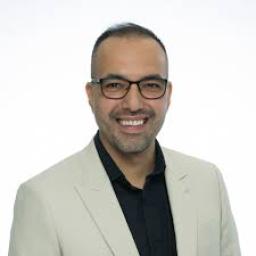
Victor Jeffrey Leyton
Associate Professor
School of Pharmaceutical Sciences, Department of Cellular and Molecular Medicine at the University of Ottawa
Sophia N. Karagiannis
Professor of Translational Cancer Immunology and Immunotherapy
St. John’s Institute of Dermatology, School of Basic & Medical Biosciences, King’s College London
Sharsti Sandall
Executive Director, Head of ADC Biology
Pfizer
Stuart Barnscher
Senior Director, Preclinical Programs, ADC Therapeutic Development
Zymeworks
Format: 1 hour webinar: 20 minute interview followed by 40 minute panel discussion
Good afternoon everyone, and welcome to today's Thought Leadership session, Engineering the Future of ADCs: Innovation, Efficacy and Clinical Integration. My name is Rachel, and I'm delighted to guide you through today's session, which will explore how tumour biology and chemical engineering are shaping the next generation of antibody drug conjugates. We're honoured to be joined today by our featured Thought Leader, Dr Victor Jeffrey Leyton, Associate Professor in the School of Pharmaceutical Sciences and the Department of Cellular and Molecular Medicine at the University of Ottawa. Dr Leyton is a pioneer in antibody drug conjugates and antibody-based therapeutics. Over the course of his career, he has developed groundbreaking technologies, including the patented Accum® nuclear-targeting platform, which is now advancing into clinical trials. His research bridges molecular pharmacology, nuclear targeting, artificial intelligence and precision oncology with multiple patents, a spin out company, and collaborations with leading academic and industry partners worldwide. He has authored numerous high impact publications and is widely recognised as a Thought Leader in the field. He's also been invited to speak at major global forums and is serving on influential committees shaping AGC and safety and innovation.
Dr Leyton, thank you for joining us today. So, to begin, what inspired your research into antibody-drug conjugates and how has your focus evolved over the years?
Well, thank you for the invitation, Rachel. First of all, very happy to be here, humbled to be invited, and more humbled to be working on this great event with an expert panel with great expertise in ADC. So, thank you to the panellists as well. So back to your question, how did what inspired me to work on antibody drug conjugates? It was always just a natural love for antibody based therapeutics, beginning from my PhD and learning how different versions of antibodies could be engineered, as well as how they can be loaded on with different types of payloads using different complexing agents for a variety of different applications, including imaging and therapy, and in 2013 when I started my independent research program, what really did it was the fact that I was one to pivot from developing radio labelled antibodies to something else. And there was a lot of work going on with maybe siRNA labelled antibodies or peptide labelled antibodies, you name it. But at that time, 2013 was when the first approval for a solid tumour ADC was approved, and I started to notice that there was issues with how it accumulated inside target tumour cells. And at that time, I was working on routing antibody-based conjugates into the cell nucleus. And so, for that, you needed to really understand the intracellular transport system. And I said, there's a great opportunity here to start working on this biological component, I would say. And the rest is history.
Well, it's really fascinating. So, can you summarise the central goal of your current ADC research and what unmet clinical needs are you trying to address?
Okay, well, as we'll hear from the panel, this is a focus on more of the biology that should, I believe, lead the next few years for ADC development. ADCs have been led by the chemistry, and those chemistries advancements have led to the great successes that we've had in the field. Moreover, the chemistry has also started was also matched, obviously, with biology aspects, such as the linker release system being matched for the lysosomal environment of target tumour cells, as well as what has been known throughout the entire past decades in antibody therapy is the importance of antigen expression. So however, now that the field has matured, we have basically caught up with the biological aspects and realised that we really need to understand, not only understand the underlying tumour biology, but then develop perspective strategies, I would say, to design optimal designs match to your cancer of interest. So, my research focuses on that. My research is really also wanting to do something with the with the with the latest advancements in artificial intelligence. So, we've been working on ways to guide AI based methods or approaches through the biology to basically identify more ideal ADC designs for specific target antigens and their accompanying tumour systems. So that's what my research focuses on now, right?
Okay, and so, speaking of ADC designs, what makes your approach to ADC’s unique compared to, say, conventional ADC design strategies?
Oh, thank you for that question. I really want to hear from the panel later on, on this my personal approach is that I'm not a chemist. My lab won't be making novel linkers or novel payloads to develop novel chemistries for ADCs, and this is important. What I do believe, is that there is large redundancy in the field, because once a certain linker payload chemical combination has been found, the field follows that, and the next thing you know is you get a lot of ADCs developed against diverse targets, but still keeping that redundant linker payload system. And this is, this is fine. This is, this is great. However, as we as I mentioned, we have to now match these more with the underlying tumour cell biology. So, where the distinction in my research is really to interconnect specific underlying biological features in the context of how ADCs are delivered intracellularly with specificities, based on our current toolkit of linkers and payloads that we have available that are popular in use. Yeah, yeah.
Very interesting. Okay, so your work spans molecular imaging and therapy. How are these integrated into ADC development?
Oh, okay, well, molecular imaging, I was really lucky and fortunate to actually start off with imaging. Imaging taught me two things. The first thing that it taught me was that it targeting is different in imaging as it is in therapy. So, in imaging, what you're looking at is the high contrast the signal of the tumour relative to the signal in the background. However, what that doesn't do for you is really identify absolute tumour uptake, so that when you go into a therapeutic setting, the absolute tumour uptake is critical, because that drives how much of the payload is being accumulated at the tumour site. In contrast, imaging can play around with just scaling tumour to background ratios to have a high contrast image. That as long as it's good enough to precisely identify where the tumour is, that would work well for diagnostic or prognostic type of applications, but that it doesn't hold for therapeutic applications. So, the second thing it taught me, though was that it is essential, it is critical that we understand where our drug is going. And so, for me, I always aim to have some imaging experiments alongside novel ADCs that we're developing just to confirm the bio distribution, the tumour uptake, and again, to identify potential non-specific toxicity issues, which we'll also talk about later in this webinar.
That's great. Yeah, thank you. So, I know we'll also come back to this later in the webinar too, but I was wondering if you could share your insights on how target selection and linker technology are changing the game in ADC efficacy and safety?
Oh, that's a great question. I don't want to try and answer this by myself. I will just say that antigen expression is critical. Yet there's no real universal system to quantify what expression is, and additionally, what is high expression versus mid versus low expression for a specific tumour type, and in relationship to the healthy cells in normal tissues. All these things are parameters that fluctuate greatly. And I think that there has to be a lot more research in this area.
Yeah, yeah, precisely, okay. And so, I want to come on to look at translational impact and clinical relevance as a theme. So, I was wondering, what are the biggest translational hurdles facing ADCs, especially for solid tumours?
Oh, I would have to say, premature design selection leading to unanticipated or even if you anticipated surprising toxicities downstream. And I'm not saying what I, I'm not saying that I'm going to provide some novel insight to fix this problem. I think it's natural that the way that ADCs are advanced through the clinic is very good because, in general, the way that drugs are approved is based on efficacy in really high-quality randomised control trials. And now where we're at is that we're learning about real world effectiveness and so and so, it's just a natural progression. It's not something that is a limitation. It's just how things are. And so, now that we are identifying real world effectiveness for approved ADCs - well now we're starting to see the toxicities that are coming out, or the lack of efficacy evidence based by two recent withdrawals of approved ADCs, I think blenrep in multiple myeloma, atrial delvey in metastatic urothelial carcinoma. So, that's where we, that's where we are, and I'll leave it at that.
Okay. Yeah, great. Thank you. Given your vast experience, how do you foresee your research impacting clinical oncology practice over the next five to 10 years?
Ah, I don't know I would say I have vast experience. I think my impact is more focused on the pre-clinical side. Again, the attrition rates for ADCs are horrible. Again, it's because of this empirical nature of research. And I'm not I'm not complaining about it, but that's just how it is. And so, there's this mix and matching of linker payload systems with different target antibodies. So what that is, though, what that does cause, in my view, is it's a really unsustainable economic model that scales from small academic labs like mine to early biotech’s that may be having investor pressures and even large scale big pharmas that will have to invest $1billion, $2 billion into a single ADC design for a single end indication, and then they won't start getting back profits until at least a decade after development. So, it impacts every everybody here. So, what I do is I'm trying to really just use AI based but guided by tumour cell biology to really identify ideal cancer. Edits that can streamline this, this early phase, but critical area in the ADC development process, so that you actually have a better shot at getting long term value down the road in terms of the clinic. That's very early on our side. But one thing that we're we are doing is, we're working here at the Ottawa Hospital, we've been looking at, we've been performing real world effectiveness studies, cohort studies, looking at how and HER2 is really causing, as we all know, these interstitial lung disease. But what we're finding out is that we are dosing patients based on the randomised, clinical controlled doses, but the patients that are faring better, they're staying on longer, actually, are starting out at lower doses, and that's a big issue. A second component that we're working on clinically, is we're working on B cell acute lymphoblastic leukaemia, where we're trying to use our AI method to map ideal CD22 expressions with other underlying biological features and identify some candidate ADCs that would work better than the current one, which is inotuzumab ozogamicin, which, by the way, uses a pH sensitive linker with this highly potent calories in payload. But if you look back in the literature, you'll see that it was actually the design was based on gemtuxumab ozogamicin, and it was because gemtuxumab ozogamicin design worked. So, let's try something that works. The first papers were in Hodgkin's lymphoma, not even for B ALLO, which was identified down the road. So that kind of underscores this, this needs to start really precisely designing not only efficacy, but potential toxicities early on in ADC development.
Great. Yeah, very, very interesting. Okay, so this brings me to my final question, are there any current or up upcoming clinical collaborations or trials related to your work that you can share with us?
Oh, like I just mentioned, like we're working at the Toronto at The Ottawa Hospital to try and develop an ADC that is AI based matched with the phenotypes of patients there, so we can then start to do something very, very precise upfront.
Yeah. Yeah. Okay. Well, thank you, Dr Leyton, for sharing such valuable insights into the evolving landscape of ADCs. This has set the stage perfectly for our panel discussion on Interfacing Tumour Biology with ADC Chemical Design. At this point, I'd like to hand over to you as the moderator for the discussion. So perhaps you could start by introducing our panellists or inviting them to maybe briefly introduce themselves.
Yes, yes. Thank you very much. So, I'll ask you to once again, thank you for being here. Really, really, grateful. I'm enjoying everything that I'm learning from you. So, I'll just start with Sophia Karagiannis. Please introduce yourself.
Yes. Hello. I'm Sophia Karagiannis from King's College London in the UK. I'm a Professor of Translational Cancer Immunology and Immunotherapy. Our interest is an antibody engineering for cancer therapy, including antibody conjugate design. And our interest in our passion is trying to understand biology in order to design the correct antibody or the more efficacious antibody structure.
Thank you. I'll go next to Dr Sandall from Pfizer. Thank you for being here. I enjoyed our conversations. Please introduce yourself.
Hi everybody. Thank you so much for the opportunity to join this webinar. My name is Sharsti Sandall. I am an Executive Director and Head of ADC Biology at Pfizer. I've been at Pfizer for 12 years and working on ADCs during the course of that time, developing several that have been moved into clinical trials. And like Dr Sophia Karagiannis, I share a passion for understanding the biology and of tumours and trying to match and pair with the optimal ADC to take advantage of the biology underlying the disease. So nice. Nice to be here. Thank you.
Thank you Dr Sandall, and we have Dr Stuart Barnscher, I hope I said your last name correctly - from Zymeworks. Please Dr Barnscher, introduce yourself.
Yeah, you nailed it. I'm Stuart Barnscher. Really, really happy and excited to be here. I'm a Senior Director at Zymeworks, so I head up the pre-clinical ADC program, so that covers everything from very early discovery all the way through to IND filing for our drug candidates. Zymeworks is in a unique situation where we are, we are a small to mid-size biotech company, but we happen to have some, some really solid protein engineering and antibody engineering capabilities, as well as medicinal chemistry. So, under one roof, we're able to kind of carefully and thoughtfully design our antibody drug conjugates, and that's what I am, and our group is really passionate about doing, is getting every design feature right so that that can actually translate into a benefit for patients in the clinic.
Thank you. Okay, so I'll just kick off this, this panel meeting. So, for the audience who are watching now or will watch later, we had a pre-event discussion, and we really wanted to tackle how the biology can drive future ADC innovation. So, we did. We kind of broke this up into two buckets. The first topic is based on tumour heterogeneity. This includes the tumour, microenvironment and the target antigen, and this also would be including any antibody engineering aspects. The second topic is more on the linker, payload, biology, matching, how we need to look at this more carefully, and including in that topic, any pre-clinical toxicity models that can be put into the early part of the development phase. And lastly, we'll just have a group discussion on future areas, and this also can include any AI based approaches. So those are the those are the two buckets and the conclusion. So, I'll just start with the topic one. And for this, I'd like to really start with Dr Sophia Karagiannis and get your thoughts on how ADCs intersect with the cell surface phenotype and the extracellular environment.
So, I guess, one of the biggest challenges we have is selecting a target that's expressed at high levels in the tumour and as low as we can levels into the normal tissues to avoid toxicities and increase our therapeutic window. So, this is a big challenge, because, as we all know, cancer antigens are self-antigens in many ways. So, for targeting cancer cells, we're looking at an upregulated, or, you know, dysregulated, molecule that's expressed, hopefully, on the surface. So, identifying cell surface expression is also a huge challenge. We have found that looking at our targets, that a lot of the times, it's very difficult to select a target and to guarantee that is found on extracellularly in those cancer cells within a chemo microenvironment, and the heterogeneity is quite significant that we could see.
Okay, do you have, like, a particular story, like, what would make a nice target for you to pursue as an ADC target?
I guess I would have originally said, when I started this work, that the high expressing on high percentage of cancer cells is what we need, and hopefully all on the surface right, but that was not the reality. And so, the reality is that we see a variety of expression levels across the tissue, and we hope that even medium to low levels of some of the targets actually look very, very promising in some of our studies. And that, I guess, is a lot to do with the type of ADC that we design. For example, an ADC that can deliver a payload that can be released intracellularly kill the cancer cell and allow for bystander effect killing. So, then we can target as many cancer cells as possible, sometimes when the ones that don't express the target a high enough level. Now, in a more recent studies looking at, for example, the anti-HER2 story, we can see that lowly expressing tumours, which have HER2 potentially could be of very significant interest. Patients expressing HER2 positive tumours can benefit from testosterone targeted a disease, for example. So, I think that's an interesting story, right? And I don't know what other panellists think on this, but that's something to consider.
Right, let me open this up to maybe the other panellists too, just on antigen expression and just to touch on HER2. I've heard discussions at many congresses where it's almost like HER2 is so famous that it's the standard for high expression. Yet HER2 is so much more highly upregulated and expressed than other antigens that are, quote, unquote over expressed. So, does anybody have, do you or does anybody else have any kind of ideas on that relativeness of high expression?
Yeah, I mean, it's a really good point, and I agree with everything you said. I think HER2, you know, is orders of magnitude higher than most targets. It also, we know can be act, you know, trust whose map is active on its own, though, in a HER2 high setting, you also have the confounding, or maybe not -maybe it's a good problem to have, but you know, you have a potential combination effect with the antibody itself having a function, and then the payload itself having a function. But I think this really gets back to the biology of the target. And I think there are, there are targets that have unique biology that you can take advantage of, that aren't necessarily really highly expressed. For instance, you know, Pfizer is developing an ADC that targets PDL one, and we're seeing really interesting results with that. It is not a very highly expressed target, but it's also expressed on cells in the tumour microenvironment. And one of our hypotheses, and things we're exploring pre clinically is whether or not targeting some of those cells in the tumour microenvironment are kind of working in a positive way to also benefit patients. So, I think it really gives back to not just looking at expression of the target, but what is the normal biology of the target, and can you somehow capitalize on, on that part of the equation to further enhance the ADC activity?
That's great. You know what - that was a perfect answer, because it leads me right into the tumour microenvironment, which is another subtopic in this big topic. And I really would like to hear from anybody, maybe Dr Barnscher about the, not only how the tumour microenvironment plays into this, but actually antibody engineering approaches. For example, I know Zymeworks is founded as an antibody engineering company, but there are now people working on ADCs, where the CDRs are mutated so that they preferentially bind their target antigen in the acidic environment of the tumour microenvironment. Could you, could you touch on that a little bit?
Yeah, I mean, maybe where I want to touch first is just, just a little bit on target heterogeneity. Because I think one of the things that that we've come to realize at Zymeworks is there's intra patient tumour heterogeneity as well as inter patient tumour heterogeneity, which means, you know, within a patient population, you're going to have patients that express very high levels of target antigen and some that express very low and we know that target is maybe necessary, but not sufficient for activity. But even within a single patient tumour biopsy, you're going to have that heterogeneity. And again, that biopsy is just a very small smidgen for a non-scientific term of the tumour. There was some really interesting work from a Nature paper back in 2022 looking at ovarian cancer targets. And two that are relevant design works are folate receptor alpha and NaPi-2D and when we did an analysis of just one patient's single cell RNA Seq data, we saw that different areas of the tumour had very different folate receptor alpha or NaPi-2D gene expression readout. So, we found that to be quite interesting, and maybe as a segue to kind of how some antibody engineering techniques could be, could be helpful and useful we're exploring by specific targeting. So being able to target two different antigens such that if only one is present, the ADC would still be active. If both are present, maybe there could be some enhanced function. So, it's, both antigens wouldn't be required for activity, because I don't think that would really solve the heterogeneity kind of issue. But either or antigens could be present, and you could still get targeted delivery of the payload as a as a bit of a follow on to that too, as you were talking Dr Leyton, because the tumour micro environment is comprised of not just the tumour cells, but also immune cells, I can think of some, some cancer types, like pancreatic cancer, that have a very high stromal content, and that could create a little bit of an extra burden. So, you could envision targeting those stromal cells, potentially with one arm of a bispecific as well as the tumour cells with another arm of the bispecific. But then I think you run into payload selection. Will you have a payload that is effective against both the stromal cells as well as the tumour cells? You could envision doing this with not just stromal cells, but any other kind of immunosuppressive cell type that could be in the tumour microenvironment. So that's interesting. Another thing that we've also thought about is maybe, you know, combining an ADC with a bi specific T cell, targeting by specific and looking at combination therapy, obviously, for two exploratory therapies. That's tough to do in a clinical trial, but there might be some point where that type of combination could converge naturally.
I have some follow up questions. I think we have time too. Is there a burning question that Dr Sandall or Dr Sophia Karagiannis you have?
I would like to make a point here. Another thing that we need to consider when it comes to target is whether expression and biology is retained in metastatic disease. Because a lot of times we are asked to target metastatic disease or treatment resistant disease that has remained after, you know, the initial therapy, the primary therapy. And that's an interesting one because, for example, the example before of follow receptor alpha is an interesting one because we have found that in follow up biopsies, some patients tumours retain follow receptor alpha, and some patients tumours do not retain follow receptor alpha. And I'm sure that is the case for other types of therapies. So, it is very interesting to also look at follow on biopsies or longitudinal biopsies to understand what is the biology of the cancer you know, relation to this target, whether that's an important target that the cancer depends upon, for example, either for the antibody itself or even for the payload. So, these are key things that we potentially can consider within the context of heterogeneity in the chemo microenvironment.
Absolutely, absolutely. And I think that stuff will come out as more studies are looking at the effectiveness down this downstream Dr Barnscher, actually, I would like to know a couple things. One is, if you have a bispecific against two antigens, do you have to have each CDR at a super high affinity to compensate for bivalent avidity? And my second question is, in a bispecific setting where you want to do like an immunoactivated ADC, which is a different, new type of ADC design that is coming out. What are your thoughts on the fact that, well, the antigen presentation side has to stay on the cell surface, but the target antigen has to go internal. So now, are you getting, like, a cross-cancelation effect? Let us know?
Yeah, yeah, no. Very good questions. Very short answer is, for most of your questions, we're not sure. One of the things we're exploring at Zymeworks is how format can aid in bispecific design as well as affinity, like you mentioned. So, and we've performed some interesting experiments where the worry with trans binding events when you have two cells that express target A and target B, and you do happen to bind in a trans format, binding to Cell A and Cell B. Do you get any internalisation events right, or is it just kind of hung up there in between the two cells? What we what we found, preliminarily, is that it can internalise, and there are some formats that maybe favour internalisation, one way or the other. So, the short answer on affinity, do you need high affinity? I think it depends on the format. If you're binding in a single, monovalent format, I think having some high affinity would be okay. Because we're exploring formats where you can retain the bivalent binding and still get that avidity effect, I think there, you know, you're, we're going to end up exploring multiple different kind of affinity avidities for each target, and kind of find which one works best. To your second question, which was, I think, asking about, you know, the competing mechanisms of an antibody drug conjugate, where you have binding and internalization to your target cell, and then perhaps the other side of the coin, where you just want to have your antibody bind on the cell surface and stay there, and then kind of interact with the immune cells in in some way. So the short answer to that is, we haven't explored that directly, those kind of two competing modalities, and that is kind of front of mind, I think, if you're investigating those, I think where we're thinking is, is that, are there cell types immune cell types in the tuber tumour, micro environment, that are immunosuppressive, the depletion is actually the name of the game. So, you're kind of taking the ADC mechanism and how it's inherently designed to work and applying that to immunosuppressive cell types that you actually want to deplete in the tumour microenvironment. So, in that kind of context, the ADC mechanism could potentially work just as it does against a tumour cells.
Okay, great. Does that mean you have, like, a preview, some publication and preparation? Love to read that.
Yeah, yeah, we do. We do have some, some work cooking. That's probably all I can say right now.
Okay, fair enough. Just something to anticipate. Okay, I'm going to switch over to bucket two, and for that I am, I'm so happy to have Dr Sandall take the lead and please, Dr Sandall, give us your thoughts on just, just give it to us about how can we use or learn tumour biology to drive payload, linker, selection, matching, please.
Okay, thank you. Yeah, I will take a stab at this. So, I'm not a chemist, although I do have a minor in Chemistry, so maybe that counts. But I've been working really closely with the chemists for, you know, over a decade trying to design ADCs. And you know, the one thing that has consistently humbled me is how challenging it is to get any old payload to work as an ADC payload, you know, to actually get the chemistry to work, to have enough on the antibody, to get enough into the cell. You touched on this a little bit in your interview to, you know, get the effect that you want. And then you have the linker, which is, you know, the other important component that has an influence over whether the drug stays in the cell, or what, how, how it's taken up non, specifically, by non-tumour cells. So, these, all of these things, have a very important role to play in being, you know, your target and your payload. So that's the chemistry part, and you have to sort of get all of that right. And I think most of the time we're doing this empirically. We haven't really figured out the right rules of the game yet, and maybe this is where AI will eventually help us. And as one of the exciting things about becoming Pfizer is we have access to such a big library of small molecules that they've developed over the years at Pfizer that we can now tap into, as you know, ADC payloads, and start to maybe figure out some of these rules. That's the chemistry part. But then, of course, the underlying it all should be the biology, and driving your payload selection based on the biology. And so far, the ADC payloads that have worked have been broadly cytotoxic chemotherapies, and I'm just going to highlight some of the work by Dr Karagiannis, where they've taken more specific payload inhibitors like CK2, and are starting to make them work as ADC payloads. And so I think this is really the future of ADC design, where we're going to start combining what we know from, you know, tumour vulnerabilities and the small molecule drug development space and actually making those molecules even more effective as ADC payloads, as we figure out better ways to, sort of, you know, get the Chemistry right other modalities, such as degraders and, you know, maybe even hetero, bifunctional molecules can be used as ADC payloads. And I think those are going to give us that opportunity to really say what, what is going, what is the cancer going to be the most vulnerable to? And then, design the ADC based off that, rather than just something that can kind of kill everything, holistic.
Great, great. I'm going to come right back to you, but since you brought up the excellent work by Dr Karagiannis, I have to ask you. Dr Karagiannis, was there something with the CDK2 and the susceptibility within the tumour system then that you said, let's try this payload. Was there something there?
Yes, that's exactly what happened. We looked at, for example, CDK4/6inhibitors are used already as a payload alone in breast cancer. However, triple negative breast cancer is resistant to CDK4/6 inhibition, and one of the ways by which this is the case is because of this regulation of CDK2 and CC pathway or access. So therefore, we reason that it's possible that we can that focus a vulnerability an inhibitor on a cancer vulnerability on a group of patients we know maybe require that consumers may require a CDK2 biology in order to survive and thrive. And what we've done there, we paired the expression of the target for the antibody with a dysregulation of its pathway, and we demonstrated that combining those into an ADC, we could see, even with a small proportion of the payload alone required for efficacy, we can show that in an ADC setting, we can give them fast reduction, reduce vastly reduced concentration of this payload directly against to the cancer cells that appears to completely melt the tumours, and that includes patient derived tumours grown in animals as well. So the data speak for themselves, that it's possible to deliver very specifically payload to the cells that really cannot cope having that pathway blocked, essentially, and that can open the possibility for many other tumour types to be treated in a different, similar way, using different types of approaches, by the same kind of thinking, kind of approach,
Exactly, exactly, exactly. And moreover, it just, its novel payload biology matching, which is so important for the future of this field. Back to Dr Sandall, do you have anything to say about linker selection with respect to internalisation, kinetics and lysosomal targeting efficiency? You know, broadly speaking, could I get, do you know something, could I get away with some linker system that, let's say, may not require neat, full lysosomal targeting, and kind of hangs out just in the endosomal system, you know, kind of thing before it gets recycled out. Anything you can add there?
Yeah, I would love to. So, one of the things we've found by working with different linkers is that some of the cleavable linkers are susceptible to enzymes that are more active in the endosome and or are active in the endosome. And so, you can, just like you said, get release of the payload in the endosome and not have to wait for the ADC to get fully trafficked to the lysosome in order to get, you know, the drug released. And what, what we found is, unfortunately, I'll go back to my comment about a lot of ADC work is empirical. I wish we could understand, oh, this link, or should be paired with this type of internalising target, but we've just, I don't think we understand enough about how most targets internalise on their own and get traffic to the lysosomes. So I think sometimes you have to figure this out a little bit empirically, but certainly in our case, we've found examples where a linker that works in this fashion pairs very well with certain antigens or gives you an advantage with that type of a linker, whereas other antigens, you'll see similar activity, whether you use a linker that's activated in the endosome or the lysosome. So, I think it really goes back to that target biology, and you can't necessarily, you may not be able to predict. So, I would love to see a future where we have more systematic types of analyses of this kind of exact data so that we could start to use AI to maybe make some predictions and pair the right target in the right linker a little more thoughtfully. But we certainly see, and I will also add, that the antibody itself can influence so, you know, we worked a lot on a target CD28, which we've published about. And what we've found is that, you know, even different antibodies that have different affinities don't always deliver drug with the same efficiency. And we've speculated, you know, different hypotheses for why, but you know, one may be the epitope that it's binding to on the target. The other one is we, you know, just out of complete luck, found that one of our antibodies had a pH sensitive loss of binding. And so, it actually no longer binds to the target when the pH drops. And so, one of our this, and this antibody happens to pair very well with the linker that works in the endosome. And so, we started to, you know, hypothesize that this release of the target somehow drives better efficiency of drug release. Now, this is still a hypothesis. We were those experiments to prove this were really, really difficult, but it was just one property that we happened to, you know, notice about this antibody that stood out, and so that was a hypothesis that we've been trying to tease apart in the lab. Merricks has now published, or they have a anti-Met antibody that's in the clinic that they specifically designed with this low pH loss of binding, and that was one of their hypotheses that, you know, seem to bear out. It with their antibody as well.
Great, great. Okay, so we have roughly 12 minutes left. So just to maximise what we wanted to talk about, I'm going to shift to more of the conclusion areas, which would move a little bit the pre-clinical toxicity, toxicity models into this area, because I think they fit, because there's not a lot there. I'll open it up to the panel, whoever feels they want to take the first stab.
Just to extend on, some excellent points you made Dr Sandall, which was about these assays, about looking empirically, looking at these biological features. So now, what about now, if I start to say, well, what, how far away is the field from, and you work at powerful Pfizer, so you have all the infrastructure and the capabilities to do these things, but let's think about all scales of ADC development. How would you standardise this to kind of where we can start to make universal assays for looking at these things about, let's say, intracellular release or internalisation rate, something like this. And let's mix in some models that are not just for, like looking at the delivery or like on the on the efficacy side. But now, how about models that also can be used to start looking at toxicity down the road? Is there some things that you can add there, and that's to anybody who ever would like to say something.
Yeah, I'll take a very quick stab and let others chime in. I mean, you, I think articulated the problem well. I think what's really great about the ADC field right now is that we have, kind of, we've reached a mass of approved ADCs that are working in the clinic and that have achieved clinical success. We also have a whole bunch that have been tested, and, you know, maybe haven't made it, but we have at least an idea of maybe toxicities that emerged. And so, I think it's going to take a partnership of, you know, people like yourself in the academic world as well as you know, maybe the industry. I think it's harder for people in industry to share data as openly as we maybe would ideally like, but to start doing some retrospective profiling of these clinical success and failures to see. I mean, I think that's the place you start, right, because that gives you your positive and negative controls. But it's, it's going to take us, I think, going to take the field, sharing more data and and figuring out what are those assays that predict the clinical toxicities.
Okay, so if I understood you correctly, and I think I agree with you, is that we have to just let the natural evolution of ADC development take its course. And we're at a point where we need to actually do these retrospective analysis to identify where the big areas of improvement should be, and then re kind of backwards engineer it and address it upfront, and develop the models or the assays to look at this is that.
I think so, I agree. And, you know, I it's not like the ADC field is new, like we there's a lot, I think, that we know. And I do think there's some assays that are pretty widely accepted to be more productive than others. You know, I think bone marrow toxicity is pretty robustly, you know, modelled pre clinically.
Yeah, yeah. Why aren't people versus other toxicity right up front, right? Just to get that out of the way.
I think they should be. If they're not, I think that's, you know, a mistake. But it goes back to how you translate it. You need to have all the parts and pieces. You need to know the efficacy in order to know what your talk, your preclinical modelling means. You need to have controls. You need to bake that in. And I don't think that's maybe something people do as robustly as they could. Stuart, I see your off mute.
Yeah, yeah, no, I definitely do, like the bone marrow toxicity. I just wanted to jump in there, because I think that's a really important assay. But you can't run that assay and predict your human like, MTD or like, where you're going to see the toxicity, which is, which is really unfortunate. We're just not there yet. So, like to Sharsti’s point, you know, you have to have the appropriate controls. And then you're, you're almost looking to, like, rank order your compounds and say, you know, relative to something that we know has this really bad heme talks profile is our compound similar? Worse or better? So maybe just to add in a few other kinds of comments, and I'll maybe start with one of my one of my most favourite mentors, once told me all models are wrong. Some models are just less wrong than others. I think with the various pieces of the puzzle, with ADCs, you almost need different assays and models for each component. So when you're evaluating efficacy, you're going to look at, you know, most xenograft in some way, argue that patient derived xenografts are better than cell line derived xenografts, and I would probably agree, but you're not really going to understand toxicity there, and maybe the PK won't be fully understood because the tumour size relative to the size of the mouse is disproportionate compared to a human tumour size and the size of the human and the surface area. So, you need a different assay for the PK study. You need a different assay for the talks. You need all of these different assays. And you kind of have to have them coalesce. And I can think of, maybe not a, maybe not a great example, but the immunostimulatory drug conjugates that got a lot of excitement, a lot of people excited in the field, which was the application of antibody drug conjugates, but using it to kind of supercharge the immune system pre clinically, those things just look amazing, you know, active at low doses, and mouse xenograft models tolerated at really high doses in non-human primates. In humans, we see very, very different results. So that just tells us that the models that we're using, pre clinically to design these molecules are imperfect and flawed. So, I think we need to, I think we need to understand the flaws of the models and make sure to share these points that if we understand that there's flaws, then let's, let's have things controlled. Let's, let's translate back from all of these nice approved molecules that we have in the clinic, where they have known a side effect profiles, they have known efficacy. Let's put those into the assay and see how our exploratory molecules compared to those.
That's excellent. So, I'm going to kind of try and use this as a concluding point, and then and then ask for your opinion on something else. So basically, at the end of the day, ADCs are a remarkable class of drugs, and as I love how you said it, we've reached a mass of approved ADCs, and that's critical, because that's allowed us to now break down individual components, individual mechanisms of the delivery process, and now have to piece that back together to just build input output loop, and that's just how it is. And there's no real quick fix for this, that's for sure. This is the process. And again, we can even have, we can learn something in the clinic, develop a model. It could be for efficacy, it could be for toxicity, but each of those models are going to be limited in some certain degree, like high throughput or for precision, and that's the situation that we currently have with ADCs at the moment. So, voila. So, my last final point is, then, obviously, what can AI do to help us? Stuart Barnscher, please start it off.
Yeah, yeah, sure. I mean, I think I started my introduction with mentioning that I'm really passionate about all components of the antibody drug conjugate, so on the antibody side and on the payload side. And I think if we think about the iterative process of developing all of the components you've got design, build and test, and I think where AI can really help is where, when you're in that design phase. Let's say you have a hit for an antibody, and you want to, you know, you have some developability flags, or your internalisation isn't great, or your affinity isn't great. I think AI can really help understand well which residues are kind of open to mutation, and then of those residues, how can we combine them in a way that's actually going to still get us a molecule that doesn't fall apart or is, is still going to bind? So, I still think you need to build and test. You can't just take these and say, like, oh, this is the one. We're just going to select one out of these 300 different antibodies. So, I think, but it can help shorten the list a little bit. So, say, if you do, if you do have a lot of different combinations of mutations to include AI, can probably help determine which ones are going to going to be the best. And that's reflective in the AI, I would say, antibody field. There's a lot of work in trying to kind of predict better sequences, more stable ADCs, as well as the binding affinity, epitope, binding, which, which, which affects internalisation and things like that.
Dr Sandall. Dr Karagiannis, do you have anything to say about AI on the I guess, the inside the cell part or clinical part.
I could say simply that I think we do need some reverse translation here from the AI community, where the data can be taken from already existing experience, from the clinical trials, to bring back to the lab and in many ways, so that we can understand what has worked in, what indication, what combination, and what patient populations as well. This is really important, but it's not going to be one size fits all. It never has been, and it will not be, and that AI is going to be transformative in that point if, if this can be successful, do you know if there's any kind of ADC clinical database, data sets that are exist, in existence?
I mean, there's databases that, I think, catalog what ADCs, you know, have been tested and sort of bring together that that information, I think it's, I'm not sure that it's unlocking the full like clinical data itself, right? It's all just based on what's published. And so, I think that is still the limit here. Is so much of the clinical experience is driven by pharma and biotechs, and you know that data just often isn't published. And so, I mean, that's, I guess, one of the unfortunate realities of our field, but, but I do agree, and I think some of the companies that are trying to push on real world data, like Tempest and other, you know, companies where they're actually and as we get more ADCs approved, and they are in the real world and outside of the clinical trial experience. I think that's a place where you could start to collect a lot more clinical translational data that you could use to learn for your next iteration. And I agree with Sophia, like understanding mechanisms of response and resistance and target expression and how that plays in and target expression to them to a microenvironment, are all areas that I think could be ripe for AI. There's a lot of AI being used in digital pathology, but we still have to get the samples, and I think that's one of the biggest challenges. In addition to sharing the clinical data right, I think every I think every trial includes some level of exploratory biomarkers, but we never see any publications on that work well. And sometimes you don't get, you know, sometimes you don't get the biopsies right. You put it into the trial, but the patient maybe can't, or, you know, or the quality of the biopsy doesn't pass. I mean, these are all things that also impact that data gathering?
Yeah, no, that's true. I'll just leave it at that. That's what my lab is humbly trying to do. And we're fortunate enough, for example, the Sanger Institute in the UK, which is probably the leading institute that that has a concerted effort to develop data sets, omics data sets for tumours. Again, it's not the best. It's not perfect. It's limited to immortalised human tumour cell lines, which can, obviously don't all the time, reflect the way it is with primary xenographs and or patient derived samples. Nonetheless, that's what we're doing. So, we've basically integrated in 2000 all of the tumour cell lines. Actually, they're transcriptomic and proteomic data, and we've mapped that into 25 years of curated, eight published ADC structural activity relationships. And it's not that simple, obviously, because proteomics has lots of data gaps, so we had to develop like specific predictive models to predict for all these protein intensities that are missing. But at the end of the day, we have models now that are able to take any ADC construction, and at least give an activity measurement of, will it work or will it not work, based on our cut off, which is not, again, could be good, could not be good, which is a 10 nanomolar IC50 or EC50 cutoff and this, at least, we think, can at least help start to again, as you said, Dr Barnscher, start limiting or narrowing that pool. And I think that could be a big, significant advancement for the for the development phase, early on, at least. So that's stuff that we're doing. I'm sure there's other people doing things like that.
I think we've reached our time limit. I would like to thank you from the bottom of my heart, really, it was an exciting experience. I hope to at least stay in touch with all of you in the future. And I don't know what else is left to say here.
I just wanted to thank you all for your comments and very, very insightful discussion. I feel like we could continue for a long time more discussing these things, but we will just wrap it up there. So, thank you once again, and of course, thank you to our audience for joining. We hope this session has provided valuable perspectives and has brought new ideas for your own work. Thank you very much.
Related posts
Engineering the Future of ADCs: Innovation, Efficacy, and Clinical Integration
Exploring Novel 3D Bioprinting Technologies: Interview with Kenny Dalgarno, University of Newcastle
Smart Molecules: Harnessing AI and Data to Advance Antibody & Protein Engineering
Computational Methods in Structure Based Biologics Engineering
Clinical Landscape of Multi-Specific Antibodies
Upcoming events
NextGen Biomed 2026
In-Person
NextGen Biomed has evolved over 18 years, from six individual events and communities into a unified platform designed to address the need for interdisciplinary collaboration, year-round engagement, and streamlined innovation and best practice sharing.
Computational Antibody Discovery
Online
Explore cutting-edge advancements in computational antibody discovery platforms, featuring real-world case studies on AI/ML in antibody engineering.