Exploring Novel 3D Bioprinting Technologies: Interview with Kenny Dalgarno, University of Newcastle
Format: 11 Minute Interview
Hello and welcome to this interview for Oxford Global.
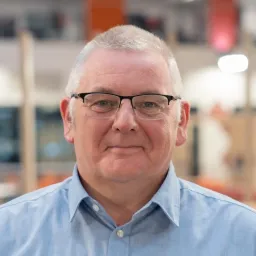
Today I am joined by Kenny Delgarno, who is a Professor of Manufacturing Engineering at the University of Newcastle.
And Kenny will be joining us for Cell 2025 and we're excited to hear more about his presentation there.
But first, Kenny, thank you very much for joining me today.
Good to be here.
So first, could you outline your background as a Professor of Manufacturing Engineering at the University of Newcastle and what does that research entail?
Yeah, so yes, I'll mainly focus on new processing techniques for biomaterials and biological materials.
So it's a slightly unusual definition of manufacturing to some degree, but that's what we'll focus on.
And that can be for medical devices or for regenerative medicine or for disease modelling applications, which is the one that may be of most relevance today.
And then for the disease modelling applications, that includes the development of new technologies for creating the models and the new models themselves, new in vitro models.
And we're currently working on models of osteoarthritis and cardiac conditions, cancer and fibrosis.
But we're also working on the technologies that allow us to make those models and make them effectively.
Thanks very much, Kenny.
And the project you're going to talk about at the conference is called the 3D-IV project.
Could you explain a little bit about what you've set out to achieve with it?
Yeah.
So the aim of the project was to kind of accelerate the adoption of novel 3D bioprinting techniques in the development and scale up of in vitro models of diseases for drug development.
And I'll maybe kind of unpick that a bit.
So first of all, bioprinting technologies allow us to deposit cells and other biological materials into well plates and other substrates in order to create in vitro models of tissues and diseases in a kind of automated and scalable way.
And next part of the story really is that we've then developed at Newcastle and patented a specific technique called reactive jet impingement.
And that gives us a new approach to bioprinting.
And we then combined our new approach with two existing techniques, one of which is micro valve bioprinting, one of which is inkjet to create a unique bioprinter which would give kind of life science researchers new capabilities in building in vitro models.
So that was looking at that, the background if you like.
And then the funding from the NC3Rs was really for us to make the first three of these bio printers, one each for Newcastle and Cambridge and Bristol universities.
And it was yes, it was exciting for us because this was the first time that these machines have been used outside of Newcastle.
First time they'd left our labs in fact, and gone out to be installed in other labs and used by new users.
And the idea was that the three sites became demonstrator sites for the new technologies.
So that researchers could see the technology in action, and they could see and with researchers based at the universities producing new in vitro models as exemplars.
And then alongside all of that, we ran a demonstrator workshop at each site during the project.
So we had three workshops, one in Newcastle, one in Cambridge, one in Bristol.
And then sort of coincidentally, we also got the chance to take the technology to the Palace of Westminster as we got an invitation from Versus Arthritis to attend an all-party parliamentary group meeting for life sciences.
And that's very good because we've got to yes, go to the Palace of Westminster and show the technology off to members of the Houses of Parliament and Lords and they were very engaged by it.
So it was good.
Thank you, that sounds great.
So you mentioned previously that your project was funded by the 2024 NC3R non-animal models infrastructure grant.
Could you talk a little bit about the importance of moving away from a reliance on animal models?
Yes, clearly the, it's generally well understood that the drug development has very high attrition rates.
And so lots of drugs are developed which never actually make it onto market.
And part of that story is then that the existing preclinical models aren't really as predictive as we'd like them to be.
And then so outside that.
So NC3Rs have long been a champion of improved models of all types.
So that's the raison d'etre.
But then also more recently, there's been a series of announcements from regulators, in particular the FDA in the States, making it clear that they want researchers to focus on the best available models, the direction of travel being away from animal models that haven't been fully validated.
And that's kind of so best available model still includes animal models, but it's an interesting kind of change of emphasis.
Whereas previously people knew that they had to get to an animal model in order to get to go through the process.
And so they would try to get there as quickly as they could; they would seek to get to the animal models as quickly as they could.
And that wasn't always the kind of best way of going about evaluating a new drug.
So focusing on the best available model, well, whether it's an animal model or an in vitro model is a good start in terms of actually forcing people to look at validated models.
But it's also there's challenges with animal models, but also current in vitro models also aren't very predictive.
So we need better in vitro models and one of the ways that we can then go about getting these is using the kind of new bioprinting techniques and new on chip technologies to create human in vitro models.
And we kind of hope in the long term that those will give us a more efficient drug development process.
Yeah, that's great.
We're seeing more and more like the shift in the regulatory landscape away from those animal models and towards these new approach methodologies.
You've now established JetBio of which you are now CSO to support the development of your bioprinters.
Could you discuss what this process so far has been like?
Yeah, so currently we're a real spin out if you like.
So we have no money, no employees and no premises.
It's kind of a business in embryonic.
And what we're doing is seeking investment to set the business up and to start to sell printers and services around the kind of consumables and also to work with customers in developing in vitro models and new ways of going about development, printing and producing those in vitro models.
Yes. So really the process so far has looked like us asking people for money for the most part and challenging seems to be the word that people use about the investment landscape at the moment.
So we have, but currently we have interest from potential investors and we're hoping we can get going soon.
And if there are any other potential investors out there, we're always happy to hear from them as well.
Fantastic.
And just to broaden it out a bit, how do you hope that 3D bioprinting will help support the development of next generation therapies?
So what we want to be able to do with 3D bioprinting to give life science researchers the freedom to be able to create the individual models that they need at the scales that they need and with much greater predictive capability than they have at the moment.
And if through using our technologies and other technologies, researchers are able to do that, then we'll actually we'll have a great set of tools to support the to evaluate if you like next generation therapies and ensure that the ones that have potential can come through to be to clinical trial and test.
Thank you so much, Kenny, for your time. Again, Kenny will be delivering a presentation at Cell 2025.
So make sure if you're interested in 3D bioprinting or next generation models to come along and see that.
But thanks.
Thanks very much again, Kenny, for your time today.
No, very welcome.
Thanks, Tom.